

Last updated: January 15, 2026
Picture this: Sarah, a backpacker in her third week of traveling through Southeast Asia, found herself utterly exhausted in Bangkok. Her budget was tight, and the guilt of “wasting” a travel day by resting gnawed at her. Sound familiar? Rest on any budget isn’t just possible—it’s essential for sustainable travel. The secret lies in understanding that recuperation doesn’t require luxury spas or expensive hotel rooms. Whether spending $10 or $100 per day, travelers can find restorative rest that actually fits their financial reality.
Key Takeaways
- Rest is a travel necessity, not a luxury – Budget constraints shouldn’t prevent proper recuperation during trips
- Free and low-cost rest options exist everywhere – From public parks to hostel common rooms, restorative spaces cost little to nothing
- Strategic planning maximizes rest value – Timing rest days during expensive destinations saves money while providing needed recovery
- Guilt-free rest requires mindset shifts – Reframing rest as essential travel maintenance, not wasted time or money
- Quality rest doesn’t correlate with spending – A $15 hostel bed can provide better sleep than a $150 hotel if chosen wisely
Quick Answer
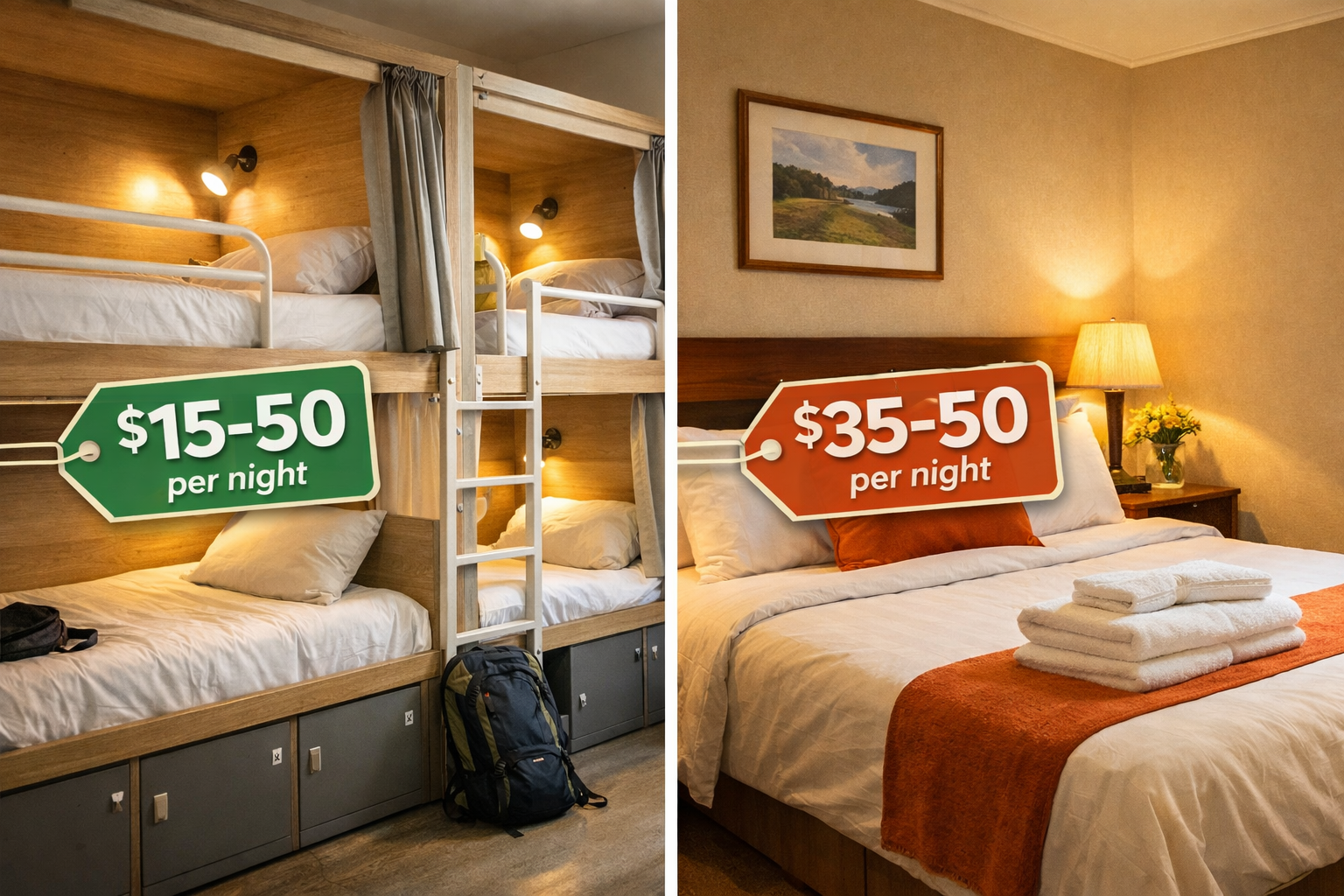
Rest on any budget means finding recuperation options that match your financial constraints without sacrificing your wellbeing. Budget travelers can rest effectively by choosing affordable accommodations with good sleep conditions ($10-30/night in hostels or budget hotels), utilizing free rest spaces (parks, libraries, beaches), and scheduling downtime strategically during less expensive destinations. The key is separating rest quality from cost and eliminating guilt by recognizing that proper recovery actually extends travel sustainability and enjoyment.
Why Travelers Need Rest More Than They Think
Travelers burn through energy faster than people staying in one place. Constant navigation, language barriers, irregular eating schedules, and the mental load of decision-making create exhaustion that compounds daily.
The body and mind require regular recovery periods to function optimally. Travel fatigue manifests as:
- Irritability and shortened patience with locals, fellow travelers, or travel companions
- Decision paralysis when choosing restaurants, activities, or next destinations
- Increased susceptibility to illness from weakened immune systems
- Memory fog that makes experiences blur together
- Physical symptoms like headaches, digestive issues, or muscle tension
Common mistake: Many travelers push through exhaustion, believing they’ll rest “when they get home.” This approach often leads to burnout, illness, or cutting trips short—ultimately wasting more time and money than strategic rest days would have cost.
Rest days actually extend travel capacity. A traveler who rests every 5-7 days can maintain energy for months, while someone who never stops often burns out within weeks.
“I used to think rest days were for weak travelers. Then I got so sick in Peru that I spent five days bedridden in a hostel, missing Machu Picchu entirely. Now I schedule rest proactively, and my trips last twice as long.” — Marcus T., long-term traveler
How to Find Rest on Any Budget: Accommodation Strategies
Finding restful sleep while traveling on a budget requires knowing where to look and what to prioritize. The cheapest option isn’t always the most restful, and the most expensive rarely guarantees better sleep.
Budget Accommodation Options for Quality Rest
Hostels ($10-30/night):
Choose hostels specifically for rest by looking for:
- Smaller dorm rooms (4-6 beds maximum)
- Individual reading lights and privacy curtains
- Lockers inside the room (reduces anxiety about belongings)
- “Quiet hours” policies enforced by staff
- Location slightly away from nightlife districts
Budget hotels and guesthouses ($20-50/night):
- Private rooms offer better sleep than cheaper, larger dorms
- Family-run guesthouses often provide quieter environments
- Look for recent reviews mentioning “quiet” or “peaceful”
- Avoid rooms facing main streets in noisy cities
Alternative accommodations:
- Couchsurfing (free) – Request hosts who value quiet evenings
- House-sitting (free) – Provides entire homes for rest in exchange for pet/plant care
- Monastery stays ($5-20/night) – Available in many countries, inherently peaceful
- Camping ($5-15/night) – Natural settings promote deeper rest for some travelers
What to Prioritize When Budget Is Tight
When choosing between accommodations, rank these factors for rest quality:
- Noise level – Read multiple reviews specifically mentioning sleep quality
- Bed quality – Firm mattresses and clean linens matter more than room aesthetics
- Temperature control – Fans, air conditioning, or good ventilation in hot climates; heating or extra blankets in cold
- Darkness – Window coverings that actually block light
- Safety feeling – Secure doors/windows reduce subconscious stress during sleep
Decision rule: If choosing between a $15 hostel with excellent sleep reviews and a $25 private room with noise complaints, the cheaper option often provides better rest. Price doesn’t equal quality when it comes to sleep.
Creating Rest Spaces on Any Budget Outside Accommodations
Rest doesn’t only happen in beds. Travelers can find recuperative spaces throughout their days without spending money.
Free Rest Locations
Public parks and gardens:
- Bring a sarong or light blanket for lying on grass
- Morning hours (7-10am) offer quieter periods before crowds
- Shaded areas provide comfortable temperature regulation
- Parks with water features create soothing ambient noise
Libraries:
- Free, climate-controlled environments
- Quiet by design
- Comfortable seating for reading or napping
- Often have WiFi for low-energy entertainment
Beaches and waterfronts:
- Natural white noise from waves
- Choose less touristy beaches for fewer vendors and crowds
- Early morning or late afternoon for comfortable temperatures
- Shade from trees or umbrellas essential for actual rest
Religious spaces:
- Many churches, temples, and mosques welcome quiet visitors
- Inherently peaceful atmospheres
- Often architecturally beautiful, providing mental rest through beauty
- Respect dress codes and visiting hours
Shopping malls (in hot climates):
- Free air conditioning during midday heat
- Food courts provide seating without purchase requirements in many countries
- Bathrooms available
- Safe environments for solo travelers
Low-Cost Rest Activities ($0-10)
| Activity | Cost | Rest Benefit |
|---|---|---|
| Reading in a café (one drink) | $2-5 | Mental rest, comfortable seating, 2-3 hours |
| Public swimming pools/beaches | $0-3 | Physical relaxation, temperature regulation |
| Botanical gardens | $2-8 | Nature exposure, gentle walking, mental clarity |
| Movie theaters (matinee) | $3-8 | Dark, quiet, climate-controlled, mental escape |
| Public baths/hot springs | $5-15 | Physical muscle relaxation, cultural experience |
Pro tip: Combine activities for maximum rest value. Buy a coffee ($2), sit in a café with a book for two hours, then walk to a nearby park for another hour of rest. Total cost: $2 for 3+ hours of quality recuperation.
Rest on Any Budget: Mental and Emotional Recovery
Physical rest alone doesn’t fully recharge travelers. Mental and emotional exhaustion require different recovery strategies that also work on tight budgets.
Mental Rest Techniques (Free)
Reduce decision-making:
- Eat the same breakfast for several days
- Stay in one location for 3-5 days instead of moving daily
- Follow a simple routine (wake, breakfast, rest, light activity, dinner, sleep)
- Let others make minor decisions (“You choose the restaurant tonight”)
Limit information intake:
- Take breaks from guidebooks and travel blogs
- Reduce social media scrolling (which creates FOMO and comparison)
- Avoid news for 24-48 hours
- Stop researching next destinations temporarily
Practice simple mindfulness:
- 5-10 minute breathing exercises (free apps: Insight Timer, UCLA Mindful)
- Journaling thoughts and feelings (notebook: $1-3)
- Walking meditation in quiet areas
- Body scan relaxation before sleep
Emotional Rest Strategies
Connection without overstimulation:
- Video call one close friend or family member instead of updating everyone
- Spend time with one calm travel companion rather than large groups
- Write letters or postcards (therapeutic without requiring immediate responses)
- Join low-key activities (book clubs at hostels, cooking classes) rather than party scenes
Permission to feel homesick:
Acknowledging homesickness or travel fatigue doesn’t mean failure. These feelings signal a need for rest and familiarity. Budget-friendly responses include:
- Cooking a meal from home using local ingredients
- Watching a familiar movie or TV show
- Listening to music from home
- Video calling during a familiar routine (Sunday breakfast with family)
Choose rest over FOMO: The fear of missing out drives many travelers to skip rest. Reframe it this way: missing one temple or museum while rested means enjoying the next ten fully. Seeing everything while exhausted means truly experiencing nothing.
Strategic Planning: When to Rest on Any Budget
Timing rest days strategically multiplies their value and reduces costs.
Geographic Rest Timing
Rest in cheaper destinations:
- Schedule 2-3 day rest periods in budget-friendly locations
- Example: Rest in Chiang Mai, Thailand ($15/day) rather than Bangkok ($35/day)
- Example: Rest in Oaxaca, Mexico ($20/day) rather than Mexico City ($40/day)
This approach provides the same recuperation while saving $20-60 per rest day.
Rest before expensive destinations:
Arriving well-rested in costly cities means maximizing limited time there. Rest beforehand in cheaper areas, then hit expensive destinations with full energy for 2-3 intensive days before moving on.
Calendar-Based Rest Planning
Weekly rest rhythm:
- Travel actively for 5-6 days
- Rest for 1-2 days
- Repeat
This pattern prevents cumulative exhaustion while maintaining travel momentum.
Monthly deep rest:
Every 3-4 weeks, take a 3-5 day complete rest period:
- Stay in one accommodation
- Minimal sightseeing
- Focus on sleep, reading, gentle walks
- Meal prep or eat simply
- Catch up on laundry, trip planning, journaling
Seasonal considerations:
- Rest during extreme weather (midday in hot climates, cold/rainy days)
- Use bad weather as guilt-free rest opportunities
- Rest during local holidays when attractions are crowded or closed
Overcoming Guilt About Resting on a Budget
Guilt about resting while traveling stems from several sources, all of which can be reframed.
Common Guilt Triggers and Reframes
“I’m wasting money just lying around”:
Reframe: Rest prevents illness, which costs far more in medical bills, extended accommodation, and missed experiences. A $15 rest day prevents a $200 sick week.
“I should be seeing everything while I’m here”:
Reframe: Exhausted sightseeing creates no lasting memories. Rested travelers remember and appreciate experiences more deeply. Quality over quantity applies to travel experiences.
“Other travelers are doing more than me”:
Reframe: Social media shows highlights, not reality. Many “always-on” travelers burn out and quit trips early. Sustainable travel requires rest.
“Rest days aren’t ‘real’ travel”:
Reframe: Rest days provide cultural immersion that rushed sightseeing misses. Reading in a local café, walking through residential neighborhoods, and observing daily life offer authentic experiences.
“I can rest when I get home”:
Reframe: Coming home exhausted requires weeks of recovery, reducing work performance and enjoyment of home life. Resting during travel means returning energized.
Building a Rest-Positive Mindset
Track rest benefits:
Keep a simple journal noting:
- Energy levels (1-10 scale) before and after rest days
- Experiences enjoyed more fully when well-rested
- Illnesses avoided through preventive rest
- Money saved by not making exhausted decisions (expensive taxis, overpriced tours, impulse purchases)
Redefine productivity:
Productivity during travel means maximizing experience quality, not quantity. A well-rested traveler who deeply enjoys five activities is more “productive” than an exhausted one who checks off twenty items while miserable.
Set rest intentions:
Before rest days, write down specific goals:
- “Sleep until naturally waking for three days”
- “Finish this book”
- “Take zero photos today”
- “Have one meaningful conversation”
Intentions transform rest from “doing nothing” into purposeful recovery.
Budget-Friendly Rest Routines That Actually Work
Effective rest routines don’t require expensive products or services. Simple, consistent practices provide the most benefit.
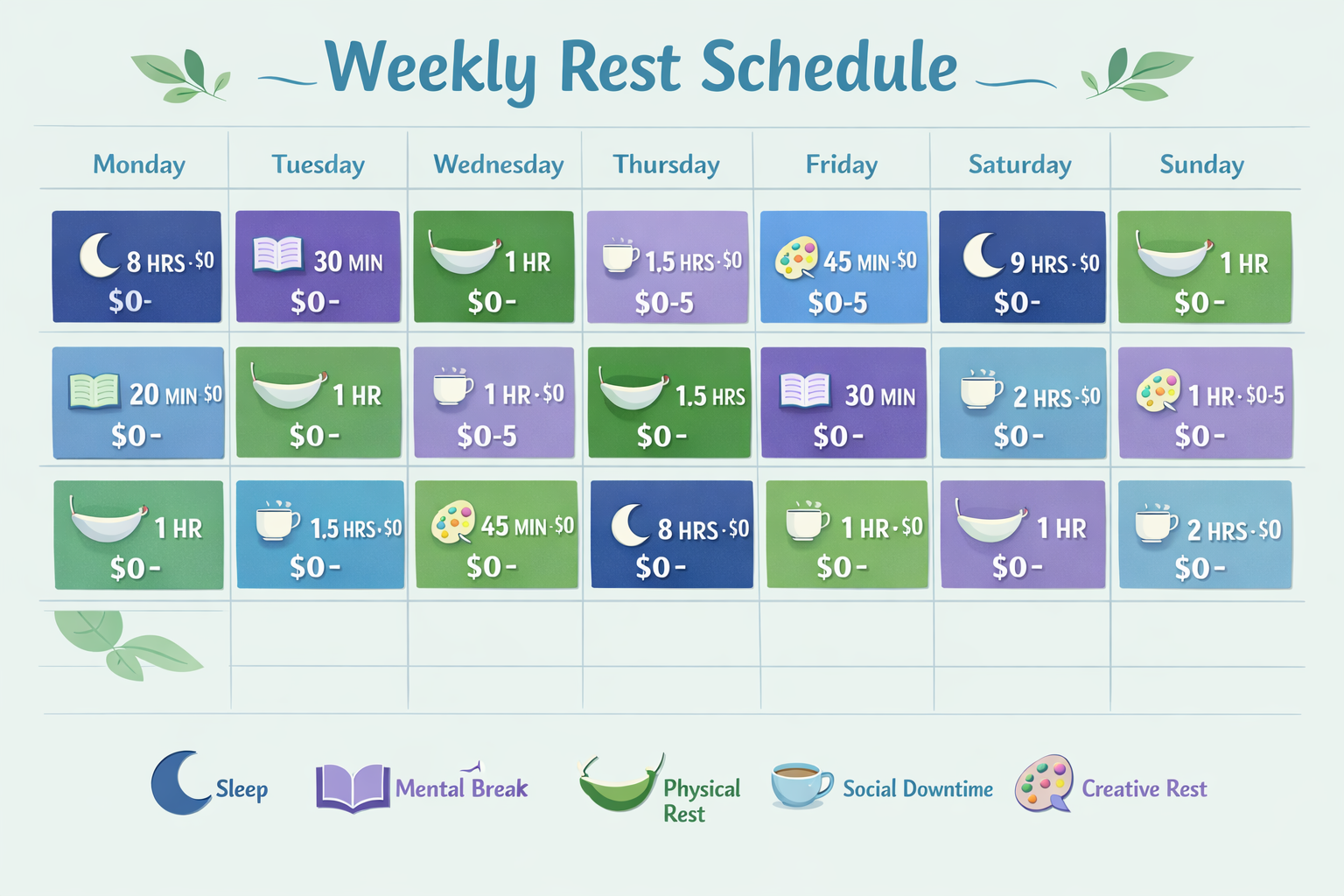
Morning Rest Routine (15-30 minutes, $0)
- Wake naturally (no alarm if possible)
- Stay in bed for 5-10 minutes without checking phone
- Gentle stretching before standing
- Hydrate (water, not coffee) immediately
- Simple breakfast eaten slowly without screens
This routine signals to your body that rest is the day’s priority.
Midday Rest Routine (1-2 hours, $0-5)
- Find shade between 12pm-3pm (hottest, most exhausting hours)
- Horizontal rest (lying down, even if not sleeping)
- Limit stimulation (no phone scrolling, quiet music okay)
- Light reading or podcast listening
- Hydrate and eat light snacks
Location options:
- Hostel common room during quiet hours
- Park bench under trees
- Library reading room
- Café with comfortable seating (one drink)
Evening Rest Routine (30-60 minutes, $0)
- Screen curfew (no phones/tablets 30-60 minutes before sleep)
- Dim lighting (use bedside lamps, not overhead lights)
- Cool shower (helps body temperature drop for sleep)
- Light stretching or breathing exercises
- Reading or journaling until drowsy
- Earplugs and eye mask (investment: $5-10, lasts entire trip)
Sleep environment optimization:
- Request quiet rooms when checking in
- Use towels to block light gaps around curtains
- Run a fan for white noise (or use free white noise apps)
- Keep room cool (open windows at night, close during day in hot climates)
Rest on Any Budget: Country-Specific Strategies
Different regions offer unique rest opportunities at various price points.
Southeast Asia ($10-25/day)
Best rest options:
- Beach bungalows in less touristy islands ($10-20/night)
- Buddhist temple stays ($5-15/night, includes meditation)
- Massage ($5-10/hour for physical rest)
- Air-conditioned malls during midday heat (free)
Rest-friendly destinations:
- Pai, Thailand (quiet mountain town)
- Kampot, Cambodia (riverside relaxation)
- Ubud, Bali (wellness-focused, budget options available)
Central/South America ($15-35/day)
Best rest options:
- Small colonial towns away from tourist circuits
- Natural hot springs ($2-5 entry)
- Hammock cafés and hostels (common in Mexico, Colombia)
- Mountain villages with cool climates (natural sleep aid)
Rest-friendly destinations:
- San Cristóbal de las Casas, Mexico
- Minca, Colombia
- Baños, Ecuador (hot springs)
Europe ($25-50/day)
Best rest options:
- Eastern European cities (lower costs, high quality)
- Monastery/convent stays ($15-30/night)
- Public parks and gardens (extensive, well-maintained)
- Free walking in nature (Alps, Pyrenees accessible by public transport)
Rest-friendly destinations:
- Krakow, Poland
- Porto, Portugal
- Ljubljana, Slovenia
South Asia ($8-20/day)
Best rest options:
- Hill stations (cooler temperatures, peaceful)
- Ashram stays ($5-15/day, includes meals and yoga)
- Guesthouses in smaller towns
- Long-distance sleeper trains (overnight travel = accommodation + rest)
Rest-friendly destinations:
- Pokhara, Nepal
- Rishikesh, India
- Ella, Sri Lanka
Common Rest Mistakes Budget Travelers Make
Avoiding these pitfalls improves rest quality without increasing costs.
Mistake 1: Choosing the Cheapest Bed
The problem: The $8 hostel bed in a 20-person dorm with no quiet hours provides terrible sleep. The exhaustion costs more in reduced enjoyment and potential illness than the $5 saved.
Better approach: Spend $12-15 for a smaller dorm or $20-25 for a private room when rest is the priority. Calculate cost per quality sleep hour, not just cost per night.
Mistake 2: Resting in Loud Environments
The problem: Trying to rest in party hostels, rooms facing busy streets, or during local festivals wastes rest time.
Better approach: Research accommodation reviews for “quiet” mentions. Ask for rooms away from common areas or streets. Move accommodations if noise prevents sleep—one good night elsewhere beats three terrible nights trying to save money.
Mistake 3: Filling Rest Days with Activities
The problem: Planning “light sightseeing” or “just one museum” on rest days defeats their purpose.
Better approach: True rest days include zero planned activities. Spontaneous short walks or café visits are fine, but no advance bookings or must-see lists.
Mistake 4: Skipping Meals to Save Money
The problem: Hunger and low blood sugar prevent quality rest and reduce immune function.
Better approach: Budget for simple, nutritious meals on rest days. Street food, grocery store meals, and hostel kitchens provide adequate nutrition for $3-8/day. Food is rest infrastructure, not a luxury.
Mistake 5: Staying Connected Constantly
The problem: Maintaining constant communication with home, responding to messages immediately, and posting daily updates creates mental exhaustion.
Better approach: Set communication boundaries. Batch messages once daily. Take 24-48 hour social media breaks during rest periods. Real rest requires disconnection.
Frequently Asked Questions
How many rest days should budget travelers take per month?
Plan for 4-8 rest days per month depending on travel intensity. Active travelers moving cities every 2-3 days need 6-8 rest days monthly. Slower travelers staying weeks in each location need 4-5 rest days. Listen to your body—persistent fatigue signals you need more rest regardless of plans.
Can you rest well in hostel dorm rooms?
Yes, with the right conditions. Choose 4-6 bed dorms over larger rooms, bring quality earplugs and eye masks, select hostels with enforced quiet hours, and pick top bunks (less disturbance from people climbing). Smaller cities typically have quieter hostels than party destinations.
What’s the cheapest way to get a full day of rest?
Stay in your current accommodation (zero additional cost), sleep late, read or journal in common areas, take a long walk in a free park, prepare simple meals from grocery stores, and sleep early. Total additional cost: $0-5 for food beyond your normal budget.
Is it worth paying more for a private room to rest?
When exhaustion is significant or you feel illness coming, yes. A $25 private room for 2-3 nights provides better recovery than a $10 dorm where you can’t sleep. Calculate the cost of getting sick (medical care, extended accommodation, missed experiences) versus the $30-45 extra for restorative sleep.
How do you rest when traveling with companions who don’t want to?
Communicate rest needs clearly before trips. Split up for rest days—others can sightsee while you recover. Compromise by alternating active and rest days. If companions consistently ignore your rest needs, consider whether they’re the right travel partners for your style.
What if the destination is too expensive to rest there?
Move to a cheaper nearby location for rest. Take a short bus or train to a smaller town, rest for 2-3 days, then return. Example: Rest in Pokhara instead of Kathmandu, or in Hoi An instead of Hanoi. The transportation cost is offset by lower accommodation and food prices.
Can you rest effectively while moving between destinations?
Overnight buses and trains provide sleep opportunities but rarely quality rest. Count them as partial rest (50% value). Follow overnight travel with a proper rest day upon arrival. Sleeper trains with private cabins offer better rest than buses.
How do you know if you’re resting enough?
Track these indicators: waking naturally refreshed, maintaining patience with travel frustrations, feeling excited about upcoming activities, stable mood, no persistent headaches or digestive issues, and making clear decisions easily. If these decline, increase rest frequency.
What’s the difference between lazy travel and necessary rest?
Necessary rest responds to physical or mental exhaustion signals and has a recovery purpose. After rest, you feel energized and ready to engage. Lazy travel stems from lack of planning or motivation and often includes guilt or regret. Rest should feel restorative, not wasteful.
Are rest days wasting travel time?
No. Rest days extend total travel capacity and improve memory formation. A three-month trip with weekly rest days provides more meaningful experiences than a two-month trip of constant exhaustion. Quality of experience matters more than quantity of days traveling.
How can solo travelers rest safely in unfamiliar places?
Choose accommodations with good security reviews, keep valuables locked, rest in public spaces during daytime (parks, cafés, libraries), inform hostel staff or friends of your plans, and trust your instincts—if a rest location feels unsafe, leave. Solo rest doesn’t require isolation; quiet cafés and libraries offer safe, social-but-calm environments.
What if guilt about resting won’t go away?
Reframe rest as essential travel maintenance, like charging your phone or doing laundry. Track specific benefits in a journal (better sleep, improved mood, money saved by avoiding exhausted decisions). Remember that sustainable long-term travel requires regular rest—it’s not optional for those who want to travel for months or years.
Key Takeaways
- Rest is budget-neutral when planned strategically – Free parks, libraries, and beaches provide quality rest spaces; affordable accommodations prioritizing sleep quality over amenities cost $10-30/night
- Quality rest doesn’t require expensive accommodations – A $15 quiet hostel often provides better sleep than a $50 loud hotel; prioritize noise level, bed quality, and darkness over price
- Strategic timing multiplies rest value – Rest in cheaper destinations, during bad weather, and every 5-7 days to prevent cumulative exhaustion and reduce costs
- Mental and emotional rest matter as much as physical – Reduce decision-making, limit information intake, and practice simple mindfulness techniques that cost nothing
- Guilt about resting wastes more resources than rest itself – Reframe rest as essential travel infrastructure that prevents illness, improves memory formation, and extends trip sustainability
- Different rest types serve different needs – Physical rest (sleep, horizontal time), mental rest (reduced decisions, information breaks), emotional rest (connection, familiar activities), and social rest (solitude or calm companionship)
- Rest routines create better results than sporadic recovery – Simple morning, midday, and evening practices signal rest priorities to your body and mind
- Common mistakes undermine budget rest – Choosing the cheapest option regardless of sleep quality, filling rest days with activities, and staying constantly connected prevent real recovery
- Country-specific strategies optimize rest value – Southeast Asia offers beach bungalows and temple stays, South America provides mountain villages and hot springs, Europe has monastery stays and extensive parks
- Rest extends travel capacity exponentially – Travelers who rest weekly can maintain energy for months; those who never stop often burn out within weeks, making rest the most cost-effective travel investment
Conclusion: Making Rest on Any Budget Your Travel Superpower
Rest on any budget transforms from guilty indulgence to strategic advantage when travelers recognize it as essential infrastructure rather than optional luxury. The backpacker who sleeps well in a $15 hostel, spends afternoons reading in free parks, and takes weekly rest days will outlast and out-experience the flashpacker burning through $100 daily while exhausted.
Budget constraints don’t prevent quality rest—they simply require intentionality. Prioritizing sleep-friendly accommodations over Instagram-worthy ones, choosing free natural spaces over expensive attractions, and scheduling strategic downtime in cheaper destinations all provide excellent recuperation at minimal cost.
The guilt that accompanies rest days evaporates when travelers track tangible benefits: fewer illnesses, deeper memories, better decision-making, extended trip duration, and genuine enjoyment of experiences rather than exhausted box-checking. Rest isn’t wasting travel time; it’s investing in travel quality.
Your Next Steps:
- Audit your current or upcoming trip – Count active travel days versus rest days. If the ratio exceeds 6:1, add rest days now.
- Research rest-friendly budget accommodations – Read reviews specifically for “quiet,” “peaceful,” and “good sleep” mentions. Bookmark 2-3 options in each destination.
- Identify free rest spaces – Before arriving in new destinations, locate parks, libraries, beaches, or gardens on maps. Save locations for easy access when exhaustion hits.
- Set rest intentions – Write down specific rest goals for your next trip: “I will take one complete rest day every seven days” or “I will spend $20 extra for quiet accommodation when exhausted.”
- Start tracking rest benefits – Keep a simple journal noting energy levels, experiences enjoyed, and money saved through rested decision-making. Review monthly to reinforce rest’s value.
- Give yourself permission – Write and carry this statement: “Rest is essential travel infrastructure. Resting today means fully experiencing tomorrow. I rest guilt-free.”
Rest on any budget isn’t just possible—it’s the secret that separates sustainable long-term travelers from those who burn bright and burn out. The question isn’t whether you can afford to rest, but whether you can afford not to.