

Last updated: February 18, 2026
Key Takeaways
- Neurodivergent Travel & Calm Planning centers on reducing sensory overload, maintaining routines, and building flexibility into every trip stage
- Advance preparation with visual schedules, sensory tools, and accommodation research cuts travel anxiety by creating predictable frameworks
- Choosing sensory-friendly travel times, locations, and transportation options transforms potentially overwhelming experiences into manageable adventures
- Communication cards, pre-arranged accommodations, and buffer time between activities provide essential safety nets during trips
- Post-travel recovery periods are just as important as the journey itself for neurodivergent travelers
Quick Answer
Neurodivergent Travel & Calm Planning involves creating structured yet flexible travel experiences that accommodate sensory sensitivities, executive function differences, and routine needs common in ADHD, autism, dyspraxia, and other neurodivergent conditions. The approach prioritizes advance preparation, sensory management, clear communication with service providers, and built-in recovery time to make travel accessible and enjoyable rather than overwhelming.
Imagine standing in a crowded airport terminal where fluorescent lights buzz overhead, announcements blare from speakers, strangers brush past in every direction, and your carefully planned schedule just changed because of a gate reassignment. For neurodivergent travelers, this scenario isn’t just stressful—it can trigger meltdowns, shutdowns, or days of recovery time. But travel doesn’t have to feel this way.
Neurodivergent Travel & Calm Planning offers a different approach. Instead of forcing yourself to “just deal with it” or avoiding travel altogether, this method builds accommodations directly into your planning process. The result? Trips that respect your neurological needs while still delivering the joy, rest, and adventure that make travel worthwhile.
What Is Neurodivergent Travel & Calm Planning?
Neurodivergent Travel & Calm Planning is a travel preparation method designed specifically for people with ADHD, autism, dyspraxia, dyslexia, Tourette’s, and other neurological differences. It focuses on reducing sensory overwhelm, maintaining helpful routines, communicating needs clearly, and building recovery time into travel schedules.
This planning approach recognizes that neurodivergent brains process sensory input, transitions, and unexpected changes differently than neurotypical brains. Rather than treating these differences as problems to overcome, calm planning treats them as important factors that deserve accommodation—just like dietary restrictions or mobility needs.
Core Principles
The foundation rests on several key ideas:
Predictability reduces anxiety. Visual schedules, detailed itineraries, and advance research about locations help neurodivergent travelers know what to expect. When you can preview airport layouts, hotel room photos, or restaurant menus before arrival, your brain has time to prepare instead of processing everything in real-time.
Sensory management is essential. Packing noise-canceling headphones, sunglasses, fidget tools, and comfort items isn’t “extra”—these are accessibility tools that prevent overload. Choosing accommodations with controllable lighting, quiet locations, and familiar food options makes the difference between recovery and exhaustion.
Flexibility within structure works best. Rigid schedules create stress when things change, but complete spontaneity can feel overwhelming. The sweet spot includes planned activities with generous buffer time, backup options for each day, and permission to skip things when needed.
Recovery time matters. Neurodivergent brains often need more downtime to process experiences and recharge from sensory input. Building rest days, quiet mornings, or low-stimulation evenings into your itinerary prevents burnout.
Who Benefits From This Approach?
This planning method helps:
- Autistic travelers who need sensory accommodations, routine maintenance, and clear communication
- ADHD travelers who benefit from external structure, visual reminders, and stimulation management
- People with dyspraxia who need extra time for navigation, organization, and physical coordination
- Travelers with anxiety disorders often co-occurring with neurodivergence
- Families traveling with neurodivergent children who need predictable schedules and sensory breaks
- Anyone who finds traditional travel overwhelming regardless of diagnosis
You don’t need a formal diagnosis to use these strategies. If you’ve ever felt drained by travel, struggled with unexpected changes, or needed days to recover from a trip, these approaches can help.
How Do You Start Planning Neurodivergent-Friendly Travel?
Start by identifying your specific sensory triggers, energy patterns, and support needs before choosing any destinations or booking anything. This self-assessment creates the foundation for every other decision in your travel planning process.
Step 1: Assess Your Needs
Grab a notebook or document and answer these questions:
Sensory considerations:
- Which sensory inputs drain you fastest? (crowds, noise, bright lights, strong smells, physical touch, temperature extremes)
- Which sensory experiences help you regulate? (music, movement, pressure, specific textures, quiet, darkness)
- What time of day is your sensory tolerance highest and lowest?
Energy and routine patterns:
- How many hours of activity can you handle before needing rest?
- Which daily routines are non-negotiable for your wellbeing? (morning coffee ritual, exercise, medication timing, sleep schedule)
- How long does it typically take you to recover from overstimulation?
Executive function support:
- Do you need external reminders for tasks, medications, or transitions?
- How do you handle unexpected changes or disruptions to plans?
- What organizational tools work best for you? (apps, physical planners, visual schedules, alarms)
Communication and advocacy:
- Are you comfortable explaining your needs to strangers or service providers?
- Would communication cards or written requests help?
- Do you travel better with a support person or independently?
Step 2: Choose Your Destination Wisely
Not all destinations offer equal accessibility for neurodivergent travelers. Choose locations based on these factors:
Sensory environment: Beach towns and nature destinations typically offer lower sensory input than major cities. However, some neurodivergent people thrive on urban stimulation—choose based on your specific preferences.
Familiarity level: Returning to previously visited locations reduces cognitive load. If trying somewhere new, choose places with detailed online resources, virtual tours, and clear information.
Language and navigation: Traveling where you speak the language or where English is widely spoken reduces communication barriers. Clear public transit systems with visual signage help with navigation challenges.
Accommodation options: Look for destinations with sensory-friendly lodging options, quiet neighborhoods, and accessibility services.
Step 3: Build Your Visual Schedule
Create a detailed but flexible itinerary that includes:
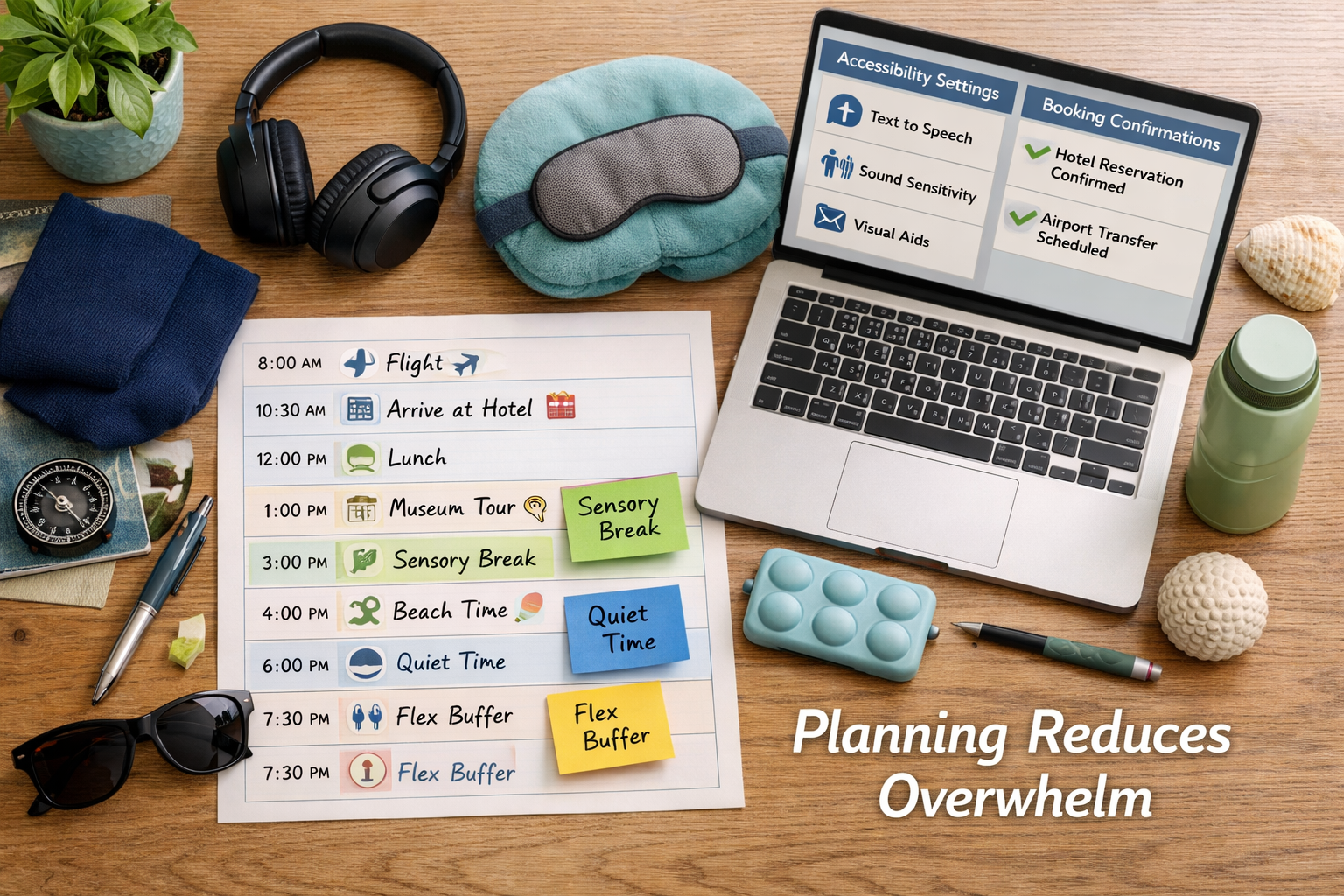
- Daily structure with buffer time: Schedule no more than 2-3 main activities per day with 1-2 hour gaps between them
- Sensory breaks: Mark specific times for quiet, low-stimulation recovery periods
- Backup options: List alternative activities for each day in case energy levels change
- Routine anchors: Maintain key daily routines (morning coffee, evening walk, medication times)
- Visual format: Use color-coding, icons, or pictures rather than text-only schedules
Common mistake to avoid: Don’t pack your schedule like a neurotypical travel guide suggests. Those “see 15 attractions in 3 days” itineraries will likely lead to burnout. Choose quality over quantity.
What Accommodations Should You Request When Traveling?
Request specific accommodations from airlines, hotels, and attractions at least 2-4 weeks before travel, providing clear written explanations of your needs rather than vague requests for “help.”
Airlines and Airports
Pre-flight accommodations:
- TSA notification: In the United States, TSA Cares provides assistance for travelers with disabilities. Call 72 hours before travel to arrange support through security.
- Pre-boarding: Most airlines offer early boarding for passengers who need extra time or sensory accommodations. Request this when booking or at the gate.
- Seat selection: Choose seats based on your needs (aisle for movement, window for control, front of plane for faster exit, away from lavatories for less traffic).
- Airport lounge access: Quieter spaces with controlled lighting and fewer crowds. Many credit cards or day passes provide access.
During flight:
- Request headphones before takeoff to manage noise
- Bring written communication cards explaining you may not make eye contact or need processing time
- Ask flight attendants about specific food ingredients if you have sensory food aversions
- Use “do not disturb” signals if you need to be left alone during service
Hotels and Accommodations
Room requests to make:
- Location: Away from elevators, ice machines, and vending areas (noise reduction)
- Floor level: Higher floors typically have less foot traffic noise
- Room features: Blackout curtains, controllable temperature, bathtub (for sensory regulation)
- Refrigerator and microwave: For safe food storage and preparation
- Advance room photos: Request specific photos of the actual room before arrival
Upon check-in:
- Ask about quiet hours and noise policies
- Request extra pillows, blankets, or towels for sensory comfort
- Confirm checkout procedures to avoid morning surprises
- Locate emergency exits and quiet spaces in the building
Attractions and Activities
Many museums, theme parks, and tourist attractions now offer accessibility programs:
Sensory-friendly hours: Some venues offer reduced lighting, lower sound, and smaller crowds during specific times. Research and book these in advance.
Skip-the-line passes: Often available for visitors with disabilities. These reduce waiting in crowded, overstimulating queue areas.
Quiet rooms: Many major attractions now provide sensory break rooms. Ask guest services about locations.
Visual guides: Download or request visual guides showing layouts, noise levels, and what to expect at each attraction.
How Can You Manage Sensory Overload While Traveling?
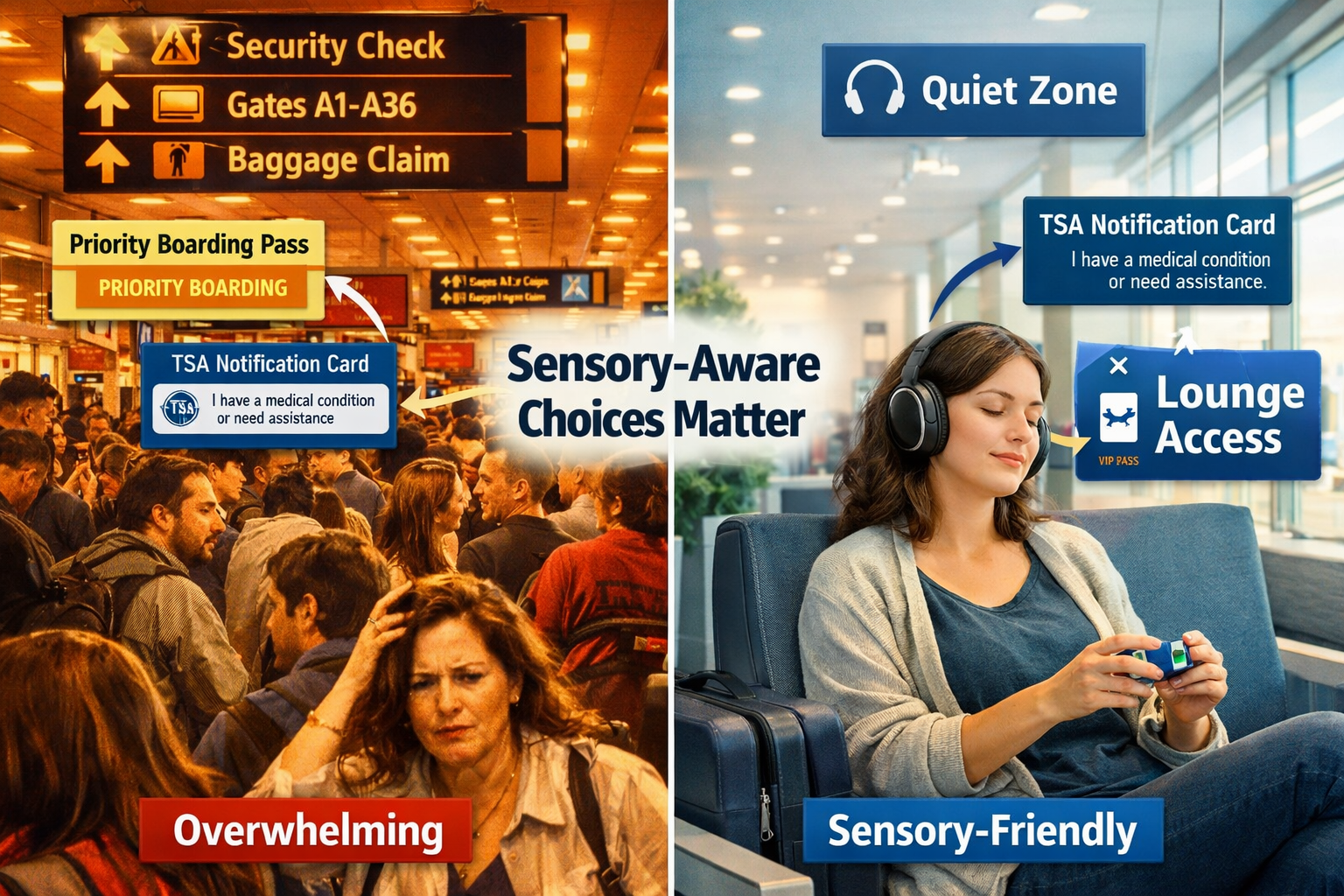
Pack a dedicated sensory toolkit with noise-canceling headphones, sunglasses, fidget tools, and comfort items, then use them proactively before overload happens rather than waiting until you’re already overwhelmed.
Essential Sensory Tools
Noise management:
- Noise-canceling headphones or earplugs (pack backups)
- Calming music playlists or white noise apps downloaded for offline use
- Loop earplugs or similar discrete options for situations where headphones feel too visible
Visual management:
- Sunglasses (even indoors if needed)
- Baseball cap or hat to reduce overhead lighting
- Eye mask for sleeping in unfamiliar places
Tactile and proprioceptive tools:
- Fidget toys, stress balls, or textured items
- Weighted lap pad or travel-size weighted blanket
- Compression clothing or accessories
- Familiar textures (favorite soft shirt, blanket from home)
Olfactory management:
- Essential oil rollerball with calming scents
- Scent-free options for accommodations
- Face mask if strong smells trigger you (also useful in crowded spaces)
Prevention Strategies
Morning preparation: Start each day with regulating activities before heading out. This might include exercise, meditation, familiar breakfast, or sensory activities that help you feel grounded.
Scheduled breaks: Set phone alarms for every 2-3 hours reminding you to check in with your sensory state and take breaks before overload builds.
Energy monitoring: Use a simple 1-10 scale to track your energy throughout the day. When you hit 5 or below, take immediate action rather than pushing through.
Retreat options: Always know where the nearest quiet space is. Identify bathrooms, outdoor areas, quiet corners, or your hotel room as retreat locations.
Recovery Protocols
When you notice early signs of overload (irritability, difficulty processing information, sensory sensitivity increasing, physical tension):
- Remove yourself from the triggering environment immediately
- Find quiet and dim lighting even if it’s a bathroom stall or outdoor bench
- Use your sensory tools (headphones, fidget items, deep pressure)
- Limit decisions by following your pre-planned backup schedule rather than deciding what to do next
- Extend recovery time beyond when you feel “okay”—your nervous system needs extra time
Choose rest over pushing through. Missing one planned activity to prevent complete shutdown is always the better choice.
What Should Your Neurodivergent Travel Packing List Include?
Your packing list should prioritize regulation tools, routine maintenance items, and comfort objects over typical tourist gear, with everything organized in a way that reduces executive function demands during the trip.
Sensory and Regulation Tools
- Noise-canceling headphones plus backup earbuds
- Sunglasses and eye mask
- Fidget tools (at least 2-3 different types)
- Weighted item (lap pad, stuffed animal, or blanket)
- Compression clothing if helpful
- Familiar comfort object from home
- Essential oils or calming scents
- Texture items (soft scarf, smooth stone, etc.)
Routine Maintenance
- Medications: Pack double what you need in original containers, plus a copy of prescriptions
- Supplements: Include familiar vitamins or supplements in daily organizers
- Food: Safe snacks you know won’t cause issues (protein bars, specific brands)
- Hygiene: Your specific brands of toiletries, not hotel versions
- Sleep: Melatonin, magnesium, or other sleep supports you regularly use
Executive Function Support
- Visual schedule: Printed itinerary with pictures or icons
- Packing cubes: Color-coded by category (clothes, toiletries, electronics, sensory tools)
- Medication alarm: Phone reminders or pill organizer with alarms
- Charging station: All cables and adapters in one labeled bag
- Important documents folder: Passport, tickets, accommodation confirmations, emergency contacts, medical information
- Communication cards: Pre-printed cards explaining your needs
Organization System
Use this packing approach:
Color-coded packing cubes:
- Blue = clothes
- Green = toiletries
- Red = medications and health items
- Yellow = electronics and chargers
- Orange = sensory and comfort tools
Carry-on essentials: Pack a 24-hour survival kit in your carry-on including medications, one outfit change, essential sensory tools, and comfort items. Never check items you absolutely need.
Photo documentation: Take photos of your packed bags before leaving. This helps with repacking and provides visual confirmation you haven’t forgotten anything.
How Do You Handle Travel Day Transitions and Changes?
Prepare for transitions by creating specific protocols for each change point (leaving home, airport, boarding, arrival) and build in extra time at every stage to accommodate processing needs and unexpected delays.
Departure Day Protocol
The night before:
- Lay out travel outfit and check weather at destination
- Place packed bags, tickets, and essentials by the door
- Set multiple alarms with different sounds
- Prepare or plan simple breakfast requiring minimal decisions
- Review tomorrow’s schedule visually
Morning of travel:
- Follow your normal morning routine as closely as possible
- Eat familiar breakfast foods
- Use calming sensory activities (shower, music, movement)
- Leave earlier than you think necessary—rushing creates additional stress
- Do a final check using your photo documentation
Arrival at airport:
- Aim for 3 hours before international flights, 2 hours before domestic
- Use curbside check-in if available to reduce time in crowded terminals
- Proceed directly to security during less crowded times (avoid 6-8am and 4-6pm if possible)
Security process:
- Have TSA notification card ready if you requested assistance
- Prepare sensory tools for after security (they’ll need to go through screening)
- Use TSA PreCheck or Clear if available to reduce steps
- Request private screening if needed
- Allow extra time for sensory recovery after security before heading to gate
Gate waiting:
- Find quietest area of gate seating, often toward back or sides
- Use noise-canceling headphones immediately
- Set alerts for boarding announcements so you can tune out gate noise
- Request pre-boarding at the desk
- Have comfort snacks and water accessible
Managing Flight Changes and Delays
When your flight changes:
- Remove yourself from the crowded gate area to process the information
- Use airline app or call customer service rather than standing in long airport lines
- Request accommodations for the new flight (seat preference, pre-boarding)
- Adjust your schedule visually, updating your itinerary with new times
- Communicate changes to anyone meeting you at your destination
- Find a quiet space to wait rather than staying at the chaotic gate
Decision framework for delays:
- Delay under 2 hours: Stay at airport, find quiet space, use sensory tools
- Delay 2-4 hours: Consider airport lounge or quiet area outside security
- Delay over 4 hours: Evaluate hotel option if available and if leaving/returning won’t add more stress than staying
What Are the Best Neurodivergent-Friendly Destinations?
The best destinations offer predictable public transit, English-language resources, sensory-friendly attractions, and accommodations designed for accessibility, with specific cities leading in neurodivergent travel support.
Top Accessible Cities
Copenhagen, Denmark:
- Excellent public transit with clear visual signage
- Many sensory-friendly museum hours
- Bike-friendly infrastructure reducing car noise
- High English proficiency
- Hygge culture values quiet, cozy spaces
Portland, Oregon, USA:
- Strong disability advocacy and accessibility culture
- Many quiet nature spaces within city limits
- Sensory-friendly events at museums and attractions
- Walkable neighborhoods with clear layouts
- Food scene accommodating dietary restrictions
Melbourne, Australia:
- Comprehensive accessibility programs at major attractions
- Quiet spaces in most museums and public buildings
- Clear public transit with real-time updates
- Many parks and green spaces for sensory breaks
- Strong autism acceptance initiatives
Reykjavik, Iceland:
- Low population density reduces crowds
- Predictable, simple city layout
- Natural attractions with space and quiet
- High English proficiency
- Small scale makes navigation easier
Nature-Based Destinations
National Parks (USA):
- Lower sensory input than cities
- Predictable park layouts with maps
- Ranger programs often accommodate different needs
- Quiet lodging options
- Choose less-visited parks (avoid Yellowstone in summer; try Acadia or Olympic)
Beach towns:
- Natural white noise from waves
- Open spaces reducing crowding
- Sensory regulation from water and sand
- Often slower pace than cities
- Choose off-season for fewer crowds
Destinations to Approach Carefully
Some locations present extra challenges for neurodivergent travelers:
Very crowded cities: Tokyo, New York, Mumbai during peak seasons require extensive sensory management and may drain energy quickly.
Language barriers: Destinations where English is uncommon and written language uses different alphabets add cognitive load.
Unpredictable infrastructure: Places with unreliable transit, unclear signage, or frequent schedule changes increase stress.
Extreme sensory environments: Very hot, humid, or loud destinations (like some festivals or events) may require more intensive preparation.
This doesn’t mean avoid these places entirely—just recognize they need more planning, shorter trips, or higher support levels.
How Do You Maintain Routines While Traveling?
Identify 2-3 non-negotiable daily routines before your trip, then build your entire schedule around protecting those specific times rather than trying to maintain every home routine.
Choosing Your Anchor Routines
High-impact routines to prioritize:
- Medication timing
- Sleep schedule (wake and bed times within 1 hour of normal)
- Morning regulation activity (coffee ritual, shower, exercise)
- Meals at consistent times
- Evening wind-down routine
Routines you can modify:
- Specific foods (focus on similar textures/types rather than exact brands)
- Exercise type (hotel gym instead of home workout, walking instead of running)
- Social contact timing (call friends at different times if needed)
- Hobby activities (bring portable versions or take a break)
Practical Routine Maintenance
Morning routine adaptation:
If your home routine is: wake up, coffee, 20-minute yoga, shower, breakfast
Travel version: wake up at same time, hotel coffee or familiar chain, 10-minute stretching, shower, familiar breakfast type (yogurt and fruit, or eggs and toast)
Evening routine adaptation:
If your home routine is: dinner, TV show, reading, skincare, bed by 10pm
Travel version: dinner at similar time, downloaded episodes of comfort show, same book or type of book, travel versions of skincare products, bed by 10:30pm
Creating Routine in New Spaces
Hotel room setup:
- Arrange items in the same spots each night (phone charger same place, water bottle same spot, clothes laid out same way)
- Use the same side of the bed
- Keep bathroom items in consistent arrangement
- Maintain the same bedtime sequence even in a new space
Meal consistency:
- Eat at similar times each day
- Choose similar food types (if you normally eat protein and vegetables for lunch, find that rather than trying local specialties for every meal)
- Keep safe snacks available for when restaurant options feel overwhelming
- It’s okay to eat at chain restaurants if that reduces stress
Time zone management:
- Shift sleep schedule gradually in 1-hour increments if crossing time zones
- Use light exposure and melatonin strategically
- Maintain meal times based on your body’s clock for the first day, then adjust
- Give yourself extra grace during adjustment period
What Communication Strategies Help Neurodivergent Travelers?
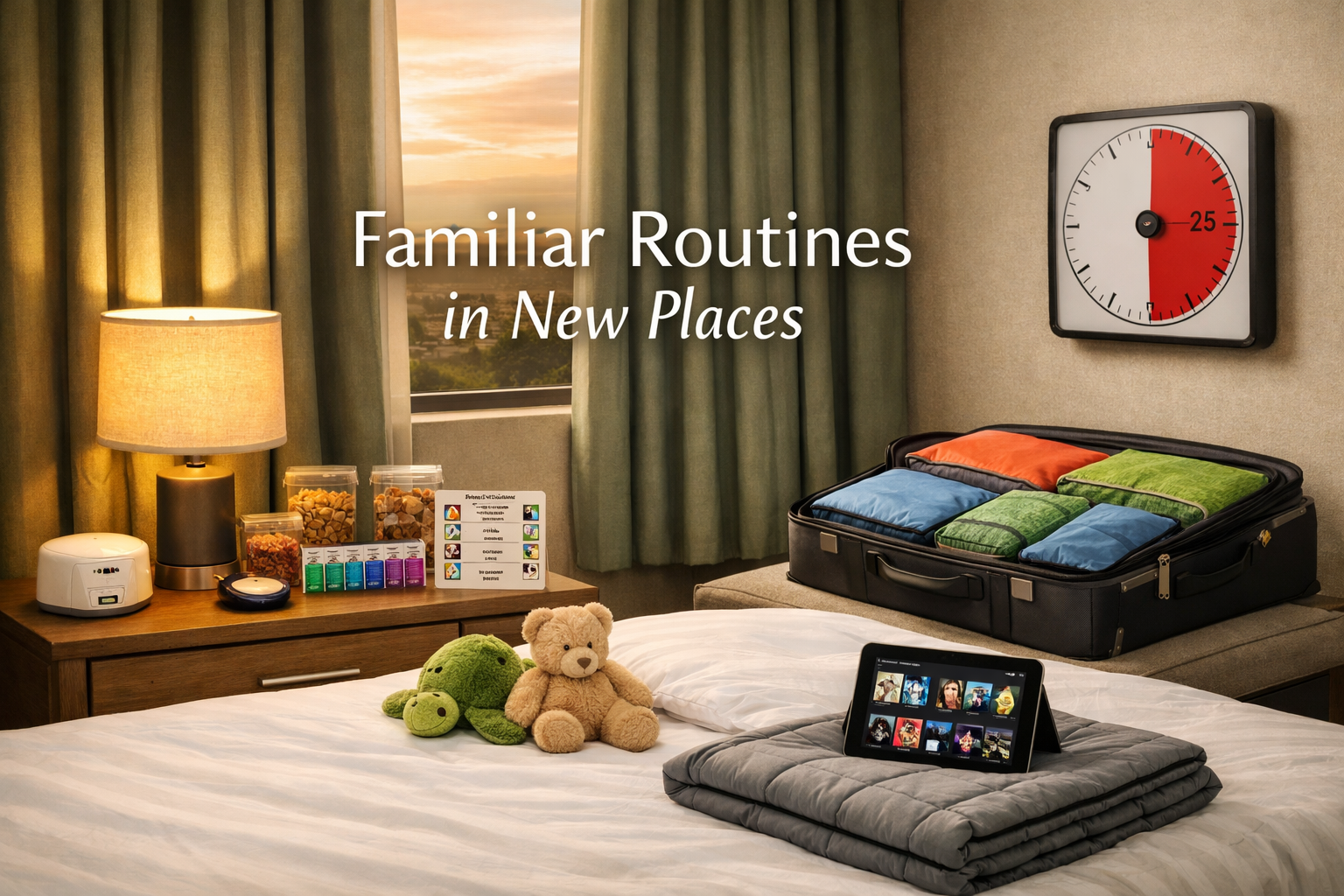
Create written communication cards explaining your specific needs in clear, direct language, then present these to service providers rather than relying on verbal explanations during stressful moments.
Communication Card Templates
General travel card:
“I am a neurodivergent traveler. I may need:
- Extra processing time to respond to questions
- Written or visual information rather than verbal-only
- Reduced sensory input (lower volume, dimmer lights)
- Clear, direct communication
Thank you for your patience and understanding.”
Airport security card:
“I have a neurological condition that affects sensory processing. I may:
- Need extra time during screening
- Have difficulty with unexpected touch
- Carry sensory tools or medical items
- Prefer step-by-step verbal instructions
I am happy to comply with all security procedures. Thank you for your assistance.”
Hotel accommodation card:
“Hello, I have sensory processing differences and would appreciate:
- A quiet room away from elevators and ice machines
- Information about hotel quiet hours
- Confirmation that I can control room temperature and lighting
- Understanding if I need to request additional items for comfort
Thank you for helping make my stay comfortable.”
Advocacy Scripts
Requesting pre-boarding:
“I have a disability that makes waiting in crowded spaces difficult. May I please use pre-boarding?”
Explaining sensory tools:
“I use these headphones/sunglasses/items for a medical condition. They help me manage sensory input.”
Declining unwanted assistance:
“Thank you, but I’m okay right now. I’ll let you know if I need help.”
Requesting modifications:
“Is it possible to [specific request]? It would help me manage my disability.”
When to Disclose
Always disclose when:
- Requesting official accommodations (pre-boarding, accessibility services)
- Safety is involved (medical needs, emergency procedures)
- Your needs might be misinterpreted as rudeness or non-compliance
Optional disclosure:
- General service interactions where it might improve service
- When building rapport with tour guides or activity leaders
- Situations where explaining helps but isn’t required
You don’t need to disclose:
- Every interaction with every person
- Situations where it won’t change the outcome
- When you don’t feel safe or comfortable doing so
Remember: You’re requesting reasonable accommodations, not asking for special favors. Disability accommodations are a right, not a privilege.
How Do You Plan for Post-Travel Recovery?
Schedule at least one full day of rest with no obligations immediately after returning home, treating this recovery period as essential to the trip rather than optional.
Post-Travel Recovery Protocol
Return day:
- Avoid scheduling anything for the day you return
- Order or prepare simple meals in advance
- Keep lights dim and noise low
- Unpack only essentials (medications, toiletries)
- Go to bed at your normal time even if you’re not tired
- Use familiar comfort routines
Day after return:
- Sleep as long as you need
- Eat familiar, comforting foods
- Engage in regulating activities (favorite shows, gentle movement, creative hobbies)
- Limit decisions and social obligations
- Process photos or memories only if it feels good, not as a task
- Continue unpacking gradually
Week after return:
- Ease back into normal schedule over 3-5 days
- Notice if you need extra sensory breaks
- Maintain earlier bedtimes if needed
- Be gentle with yourself about productivity
- Watch for delayed burnout (sometimes crashes happen 3-4 days after return)
Recovery Time by Trip Type
Weekend trip (2-3 days): 1 day recovery minimum
Week-long trip: 2-3 days recovery
International trip with time zones: 1 day per time zone crossed, minimum 3 days
High-stimulation trip (cities, theme parks, lots of activities): Add 1-2 extra recovery days regardless of length
Common mistake: Returning Sunday night and going to work Monday morning. If possible, return Thursday or Friday to have the weekend for recovery, or take Monday off.
Signs You Need More Recovery Time
- Increased sensory sensitivity beyond normal levels
- Difficulty with tasks that are usually manageable
- Emotional dysregulation (crying, irritability, anxiety)
- Physical exhaustion despite adequate sleep
- Executive function challenges (decision-making, organization, memory)
- Desire to isolate more than usual
If these persist beyond expected recovery time, you may be experiencing burnout and need additional rest and possibly professional support.
Frequently Asked Questions
Can neurodivergent people enjoy travel?
Yes, absolutely. Neurodivergent people can enjoy travel when it’s planned in ways that accommodate their specific needs. The key is matching travel style to your sensory preferences, energy patterns, and support needs rather than following neurotypical travel models.
How much does sensory-friendly travel cost?
Sensory-friendly travel doesn’t inherently cost more. Some accommodations (like lounge access or quieter hotels) may add expense, but many strategies are free (choosing off-peak times, packing sensory tools, using visual schedules). Budget-conscious options exist at every price point.
Should I travel alone or with others as a neurodivergent person?
This depends entirely on your individual needs. Some neurodivergent people find solo travel less stressful because they control all decisions and don’t need to mask. Others benefit from traveling with understanding companions who can provide support during overwhelming moments. Try both and see what works for you.
What if I have a meltdown or shutdown while traveling?
Have a plan before it happens. Identify your early warning signs, know where quiet spaces are, carry communication cards explaining you need time alone, and give yourself permission to leave situations. Most meltdowns/shutdowns can be prevented with early intervention and adequate breaks.
Are there travel agents who specialize in neurodivergent travel?
Yes, some travel agents now specialize in accessible and neurodivergent travel. Look for agents with disability travel certifications or those who specifically advertise autism/ADHD travel expertise. They can handle details that might be overwhelming and advocate for accommodations.
How do I explain my needs without oversharing medical information?
Use functional descriptions: “I have a condition that makes me sensitive to noise” or “I have a disability that requires extra processing time.” You don’t need to specify autism, ADHD, or other diagnoses unless you choose to.
What if my travel companion doesn’t understand my needs?
Have a clear conversation before the trip about your specific needs, what accommodations you require, and what support would be helpful. Share your visual schedule and sensory toolkit. If they can’t or won’t accommodate your needs, consider whether traveling together is the right choice.
Can I use neurodivergent travel strategies even without a diagnosis?
Absolutely. These strategies help anyone who experiences sensory overwhelm, needs routine, or finds traditional travel exhausting. You don’t need a formal diagnosis to benefit from accommodations that make travel more comfortable.
How do I handle travel with neurodivergent children?
Apply the same principles: visual schedules, sensory tools, routine maintenance, and generous buffer time. Involve children in planning when possible, practice new experiences beforehand (like airport security), and prioritize their regulation over sightseeing schedules.
What’s the best way to find sensory-friendly accommodations?
Search for “quiet hotels,” read reviews mentioning noise levels, use filters for specific amenities (blackout curtains, soundproofing), and contact hotels directly to ask about their quietest rooms. Vacation rentals often provide more control over the environment than hotels.
Should I bring my weighted blanket on a trip?
If it’s essential for your sleep and regulation, yes. Travel-size weighted blankets exist, or bring a weighted lap pad. Airlines allow medical comfort items, and the benefit usually outweighs the packing inconvenience.
How do I manage food sensitivities while traveling?
Research restaurants in advance, pack safe snacks, choose accommodations with kitchenettes when possible, and use apps like Find Me Gluten Free (works for other restrictions too) to locate suitable options. It’s okay to eat familiar chain restaurants if that’s what works.
Key Takeaways
- Neurodivergent Travel & Calm Planning transforms potentially overwhelming trips into accessible experiences through advance preparation, sensory management, and flexible structure
- Self-assessment comes first—identify your specific sensory triggers, energy patterns, and support needs before choosing destinations or booking anything
- Visual schedules with buffer time prevent overload by creating predictable frameworks while allowing flexibility for energy fluctuations
- Sensory toolkits are medical equipment, not luxuries—pack noise-canceling headphones, fidget tools, comfort items, and use them proactively
- Request specific accommodations from airlines, hotels, and attractions in writing 2-4 weeks before travel, using clear functional language
- Communication cards reduce stress during overwhelming moments by providing pre-written explanations of your needs
- Protect 2-3 anchor routines (medication timing, sleep schedule, morning regulation) rather than trying to maintain every home routine
- Recovery time is mandatory, not optional—schedule at least one obligation-free day after returning home
- Choose destinations wisely based on sensory environment, language accessibility, and available accommodations rather than just tourist appeal
- You deserve to travel comfortably—accommodations are rights, not special favors, and neurodivergent-friendly travel is possible at every budget level
Conclusion
Travel doesn’t have to mean suffering through sensory overload, abandoned routines, and days of recovery burnout. Neurodivergent Travel & Calm Planning offers a different path—one where your neurological needs are respected and accommodated from the first planning stages through your return home.
The strategies in this guide work because they start with a simple truth: neurodivergent brains aren’t broken versions of neurotypical brains. They’re different operating systems that require different accommodations. When you plan travel around your actual needs rather than forcing yourself into neurotypical travel models, trips become sustainable and genuinely enjoyable.
Start small. You don’t need to implement every strategy in this guide for your first neurodivergent-friendly trip. Choose one or two key approaches—maybe creating a visual schedule and packing a sensory toolkit—and build from there. Each trip teaches you more about what works for your specific brain.
Your next steps:
- Complete the self-assessment in the planning section to identify your specific needs
- Choose a destination that matches your sensory preferences and support requirements
- Create a visual schedule with generous buffer time and built-in sensory breaks
- Assemble your sensory toolkit with noise-canceling headphones, comfort items, and regulation tools
- Draft communication cards explaining your needs in clear, functional language
- Request accommodations from airlines, hotels, and attractions 2-4 weeks before travel
- Schedule recovery time immediately after your return with no obligations
- Give yourself permission to modify plans, skip activities, and prioritize regulation over sightseeing
Remember that accessible travel is a skill that improves with practice. Your first neurodivergent-friendly trip might not be perfect, and that’s okay. Each journey teaches you more about your needs, effective strategies, and what types of travel bring you genuine joy rather than just exhaustion.
The world is worth exploring, and you deserve to experience it in ways that work for your brain. Neurodivergent Travel & Calm Planning makes that possible.