



Last updated: February 18, 2026
Key Takeaways
- Family trips that don’t burn you out prioritize rest time, realistic schedules, and flexibility over cramming in every possible activity
- Successful relaxing family vacations include at least 30-50% unscheduled downtime for spontaneous rest and play
- Choosing the right destination type (all-inclusive resorts, beach rentals, or low-key nature spots) dramatically reduces parent stress
- Setting clear expectations with kids before the trip and packing smart essentials prevents most common travel meltdowns
- Building in recovery days and saying no to overscheduling protects family energy and creates genuinely enjoyable memories
Quick Answer
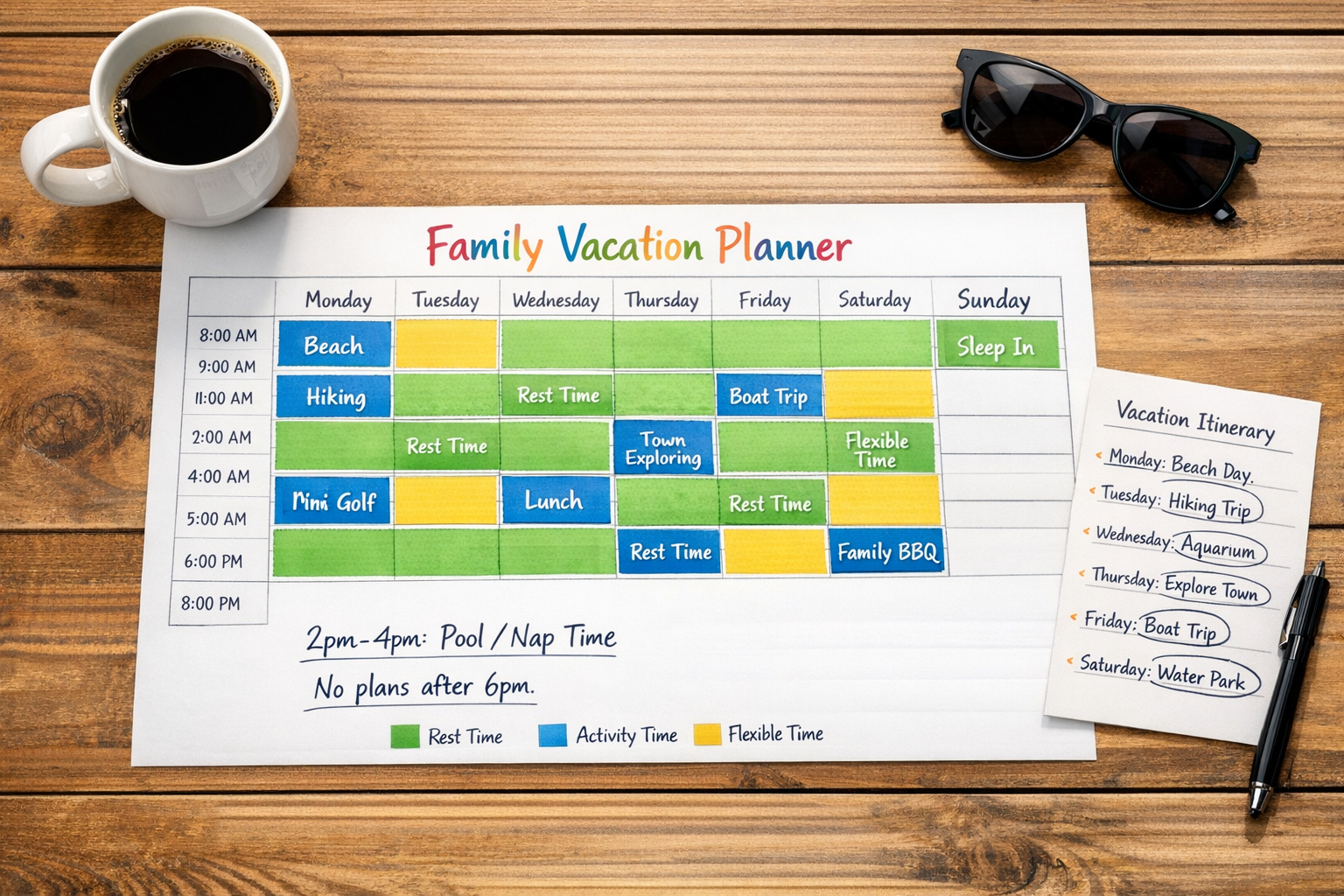
Family trips that don’t burn you out require intentional planning that balances activities with genuine rest time. The secret is scheduling no more than one or two major activities per day, choosing accommodations with built-in entertainment or amenities, and protecting at least half your vacation time for unstructured relaxation. This approach transforms travel from an exhausting checklist into an actual break where everyone, especially parents, can recharge.
Picture this: you’ve just returned from a week-long family vacation, and instead of feeling refreshed, you’re utterly exhausted. The kids are cranky, your bank account is lighter, and you need a vacation from your vacation. Sound familiar? Family trips that don’t burn you out aren’t just a fantasy—they’re completely achievable when you shift your planning approach from “see everything” to “enjoy something.”
The difference between a draining family trip and a rejuvenating one isn’t about the destination or the budget. It’s about how you structure your time, manage expectations, and prioritize what actually matters: connection, rest, and genuine enjoyment. This guide walks through exactly how to plan and execute family vacations that leave everyone happier than when they started.
What Makes a Family Trip Exhausting Instead of Relaxing?
Most family vacations become burnout machines because parents try to maximize value by cramming in too many activities, destinations, or experiences. When you’re moving from attraction to attraction, managing logistics, keeping kids on schedule in unfamiliar places, and skipping rest time to “make the most of it,” you’re not vacationing—you’re working harder than usual.
The primary burnout triggers include:
- Overscheduling: Planning more than two structured activities per day leaves no buffer for delays, meltdowns, or spontaneous rest
- Constant decision-making: Choosing where to eat, what to do next, and how to get there drains mental energy faster than physical activity
- Sleep disruption: New beds, time zones, and excited kids combine to reduce everyone’s sleep quality right when you need it most
- Financial stress: Watching expenses pile up while trying to say yes to everything creates anxiety that undermines relaxation
- Unrealistic expectations: Believing the trip must be perfect or that kids should behave differently than they do at home sets everyone up for disappointment
Choose a relaxed approach if your family needs genuine rest, you have young children with limited stamina, or past vacations left you exhausted. Choose a packed itinerary only if your family genuinely thrives on constant activity and you have the energy reserves to sustain it.
A common mistake is confusing a full schedule with a fulfilling vacation. The most memorable family moments often happen during unplanned downtime—beach walks at sunset, lazy mornings, or spontaneous games—not during the fifth museum visit of the week.
How Do You Plan Family Trips That Don’t Burn You Out?
Planning family trips that don’t burn you out starts with a fundamental rule: schedule rest time first, then add activities around it. Block out morning slow starts (no alarms), afternoon quiet time, and at least one completely unscheduled day for every three travel days.
Effective stress-free planning steps:
- Pick the right destination type – Choose places with built-in entertainment (beach, pool, nature trails) so you’re not constantly organizing activities
- Limit daily activities to one or two – If you visit a museum in the morning, the afternoon is for pool time or naps, not another attraction
- Book accommodations with space – Rentals with separate bedrooms and kitchens reduce restaurant fatigue and give everyone breathing room
- Build in buffer days – Start and end trips with low-key days; avoid flying out at 6 AM or packing the car at midnight
- Create a flexible framework, not a rigid schedule – Know what’s available but don’t lock in times for everything
- Pack comfort items – Favorite snacks, familiar blankets, and entertainment for downtime reduce stress triggers
- Set a realistic budget with padding – Financial stress kills relaxation faster than anything else
Decision rule: If adding an activity makes you think “we’ll be tired but it’s worth it,” skip it. Tiredness compounds over a trip, and that museum will still exist next year.
The edge case many families miss is travel days themselves. A six-hour drive followed by dinner out and exploring the new area counts as a full activity day. Don’t stack another major plan on top of arrival or departure days.
What Are the Best Destinations for Family Trips That Don’t Burn You Out?
The best destinations for stress-free family travel offer natural entertainment, minimal logistics, and options for both activity and rest without constant planning. Beach towns, all-inclusive resorts, national parks with easy trails, and lake cabin rentals consistently deliver low-stress experiences.
Top destination types ranked by relaxation potential:
All-Inclusive Beach Resorts
- Meals, activities, and childcare included
- No daily decision-making about where to eat or what to do
- Kids’ clubs give parents genuine breaks
- Best for families wanting zero planning during the trip
Vacation Rental Homes (Beach or Lake)
- Space for everyone to spread out
- Kitchen access reduces restaurant fatigue and costs
- Natural entertainment (water, sand, trails) right outside
- Best for families with young kids or those needing routine flexibility
Low-Key National Parks
- Acadia, Shenandoah, or Great Smoky Mountains offer easy trails and scenic drives
- Natural beauty provides entertainment without admission fees
- Camping or nearby cabin rentals keep costs manageable
- Best for active families who find nature relaxing
Small Beach Towns
- Less crowded than major tourist destinations
- Walkable areas reduce driving stress
- Local restaurants and simple activities
- Best for families wanting authenticity without chaos
Avoid major theme parks, multi-city tours, or destinations requiring extensive daily driving if your goal is relaxation. These create the opposite of restful conditions, especially with young children.
A practical example: A family renting a beach house for a week with a boogie board, some beach toys, and nearby ice cream shops will likely feel more rested than the same family doing a theme park trip with three parks in five days, even though the latter seems more exciting on paper.
How Much Downtime Should You Schedule?
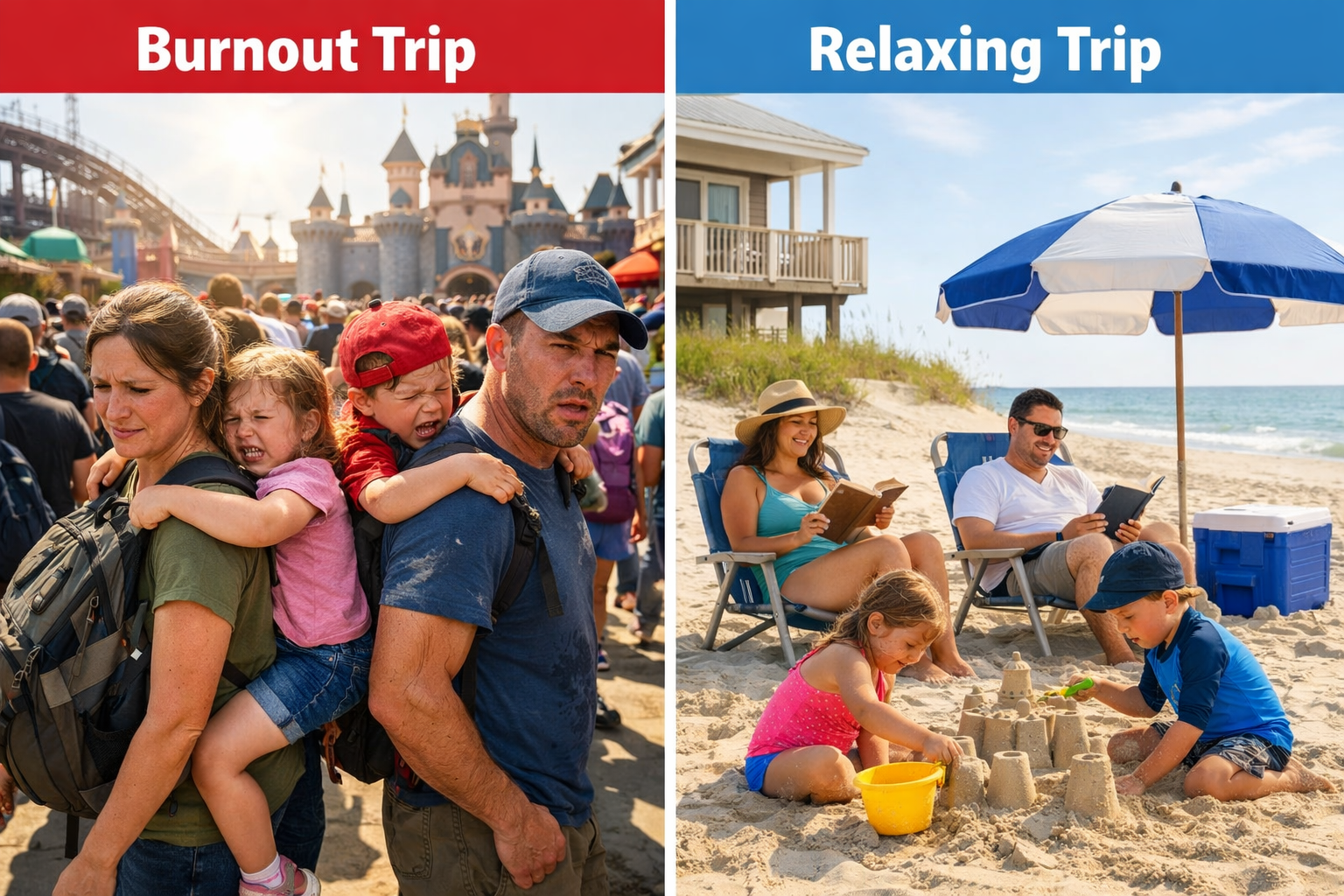
Successful family trips that don’t burn you out include 30-50% unscheduled time, meaning if you’re gone for six days, at least two to three full days should have no planned activities beyond “hang out at the pool” or “play on the beach.”
Recommended downtime structure:
- Morning flexibility: No alarms; let everyone wake naturally at least half the days
- Afternoon rest blocks: 2-3 hours daily for naps, quiet time, or pool lounging
- One full rest day per week: Completely unscheduled except for meals
- Early evenings: Back to accommodation by 6-7 PM most nights for low-key dinners and bedtime routines
This might feel like you’re “wasting” vacation time, but rest is the actual point of a vacation. The activities are bonuses, not the main event.
Choose more downtime if you have children under 8, anyone with special needs requiring routine, or if family members are recovering from a busy season. Choose less only if your family genuinely gets antsy with unstructured time (rare but real for some families).
The common mistake is believing you must fill every hour to justify the trip cost. In reality, a well-rested family enjoying simple pleasures creates better memories and value than an exhausted family checking boxes on an ambitious itinerary.
What Should You Pack for Stress-Free Family Travel?
Packing for family trips that don’t burn you out means bringing items that prevent common stress triggers: hunger, boredom during transitions, minor injuries, and bedtime disruptions. The goal isn’t to pack everything but to cover the gaps between planned activities and unexpected needs.
Essential stress-reducing packing list:
Food and Snacks
- Favorite non-perishable snacks (goldfish, granola bars, fruit pouches)
- Reusable water bottles for everyone
- Basic breakfast items if staying in a rental (cereal, coffee, easy options)
Entertainment for Downtime
- Tablets loaded with downloaded movies and games (don’t rely on WiFi)
- Headphones for each child
- A few small, packable toys or books
- Playing cards or compact travel games
Comfort and Sleep Items
- Each child’s comfort item (stuffed animal, special blanket)
- White noise machine or app
- Night lights if kids need them
- Familiar pajamas
Health and Safety
- Basic first aid kit (bandages, pain reliever, antihistamine, thermometer)
- Any prescription medications plus a few extra days’ worth
- Sunscreen and bug spray
- Hand sanitizer and wipes
Practical Logistics
- Packing cubes organized by person (reduces “where’s my shirt?” chaos)
- Laundry bag for dirty clothes
- Phone chargers and backup battery
- Printed copies of reservations and addresses (for when phones die)
Decision rule: If you’re debating whether to pack something and it would genuinely reduce stress if needed, pack it. The goal is peace of mind, not minimalism.
Don’t pack guilt about screen time. Tablets during long car rides or quiet afternoon hours aren’t parenting failures—they’re tools that prevent meltdowns and give everyone a break.
How Do You Set Expectations with Kids Before the Trip?
Setting clear, realistic expectations with children before family trips that don’t burn you out prevents most disappointment and behavioral issues. Kids handle changes better when they know what’s coming, what’s flexible, and what the rules are.
Pre-trip expectation conversation points:
- Show them where you’re going – Pictures of the accommodation, beach, or main activity help kids visualize and get excited appropriately
- Explain the daily rhythm – “We’ll do one fun thing each day, then have pool time and relax”
- Clarify what’s included and what’s not – “We’re not going to the theme park this trip, but we are going to the beach every day”
- Discuss behavior expectations – “We’ll have treats, but you still need to listen and use kind words”
- Involve them in small choices – Let kids pick one activity or restaurant to give them ownership without overwhelming them with decisions
- Prepare for transitions – “We’ll have long car rides with movie time and snack breaks”
For younger kids (under 6): Keep explanations simple and repeat them. Use a countdown calendar so they can see how many days until the trip.
For older kids (6-12): Show them the itinerary, explain why you’re building in rest time, and let them pack their own entertainment bag with your guidance.
For teens: Involve them in planning, give them some independent time if safe, and be honest about family time expectations.
A common mistake is overpromising to build excitement. Saying “This will be the best trip ever!” sets an impossible standard. Instead, try “We’re going to have fun, relax, and spend time together. Some parts will be great, and some might be boring, and that’s normal.”
What Are Common Mistakes That Lead to Family Vacation Burnout?
Even well-intentioned families fall into predictable traps that transform potentially relaxing trips into exhausting ordeals. Recognizing these patterns helps you avoid them.
Top burnout-causing mistakes:
Trying to “make it worth it” financially
- Cramming in activities because you paid for the trip
- Skipping rest to maximize sightseeing
- Solution: Calculate cost per day of peace, not cost per attraction visited
Ignoring your family’s actual rhythms
- Early morning starts when your kids are late risers
- Skipping naps for older toddlers who still need them
- Solution: Vacation on your family’s natural schedule, not an ideal one
Eating out for every meal
- Restaurant meals with young kids are stressful and expensive
- Decision fatigue from choosing places three times daily
- Solution: Book accommodations with kitchens; do breakfast and lunch there, dinner out occasionally
Not building in transition time
- Back-to-back activities with no buffer
- Underestimating how long it takes to get everyone ready and out the door
- Solution: Add 30 minutes to every time estimate
Trying to keep the same rules as home
- Strict bedtimes that require leaving fun activities early
- No-treat policies that create constant negotiation
- Solution: Relax non-safety rules; vacation is the time for ice cream before dinner
Splitting up to “divide and conquer”
- Parents taking different kids to different activities
- Missing the point of family time together
- Solution: Do fewer things together rather than more things separately
Not communicating with your partner
- Assuming the other person will handle logistics
- Different expectations about what the trip should be
- Solution: Discuss goals, responsibilities, and must-haves before booking
The edge case many families miss is the post-vacation day. Arriving home late Sunday night before Monday work and school guarantees burnout. Build in a recovery day at home before regular life resumes.
How Do You Handle Unexpected Problems Without Stress?
Even on well-planned family trips that don’t burn you out, things go wrong: weather changes, kids get sick, attractions close, or someone has a meltdown. How you respond determines whether these become vacation-ruining catastrophes or minor bumps.
Stress-reducing problem-solving framework:
Before the trip:
- Research backup indoor activities for rainy days
- Know where urgent care or pharmacies are located
- Have a loose Plan B for your main activities
- Accept that something will probably go wrong and that’s okay
During problems:
- Pause and assess whether this actually matters (most things don’t)
- Ask “What would make this better right now?” instead of “Why is this happening?”
- Give everyone, including yourself, permission to have feelings about disappointment
- Pivot to the simplest solution, not the most equivalent one
Specific scenarios:
Weather ruins outdoor plans → Embrace a movie marathon day at the accommodation; order pizza; call it a rest day
Child gets sick → One parent stays back with the sick kid while others do a low-key activity nearby, or everyone stays in and makes it a game/movie day
Major attraction is closed → Ask kids to pick between two simple alternatives rather than scrambling to replicate the original plan
Someone has a meltdown → Remove them from the situation, find quiet space, address basic needs (hunger, tiredness, overstimulation), then reassess
You’re all just exhausted → Cancel the afternoon plan, go back to the hotel, and rest; you can’t push through tiredness on vacation
Decision rule: If solving a problem requires more energy than the original activity would have provided, skip it entirely and do something easier.
The mindset shift that prevents stress is remembering that the trip’s purpose is connection and rest, not completing an itinerary. If everyone ends up playing cards in the hotel room during a thunderstorm, that’s not a failed vacation day—it’s a memory.
What Does a Realistic Stress-Free Family Vacation Schedule Look Like?

A practical schedule for family trips that don’t burn you out looks surprisingly empty compared to typical vacation itineraries. Here’s what a sample week actually looks like when prioritizing rest:
Sample 7-Day Beach Vacation Schedule
| Day | Morning | Afternoon | Evening |
|---|---|---|---|
| Day 1 (Arrival) | Travel to destination | Unpack, grocery run, settle in | Easy dinner (takeout or simple meal), early bed |
| Day 2 | Sleep in, breakfast at rental | Beach time with toys and books | Pool at rental, simple dinner in |
| Day 3 | Morning beach walk | One planned activity (aquarium visit, 2-3 hours) | Rest at rental, dinner out at casual spot |
| Day 4 | Sleep in, slow breakfast | Beach time, lunch at beachside café | Pool, movie night at rental |
| Day 5 | Breakfast, pack beach bag | All-day beach with breaks (bring lunch) | Sunset walk, ice cream, early dinner |
| Day 6 | One morning activity (mini golf or easy hike) | Pool/rest time at rental | Dinner out, early pack-up for departure |
| Day 7 (Departure) | Slow breakfast, final beach visit | Travel home (depart after lunch, not early morning) | Arrive home, unpack basics, order dinner, early bed |
Key elements that make this work:
- Only 3-4 planned activities in seven days
- Multiple “sleep in” mornings with no alarms
- Repeated simple pleasures (beach, pool) instead of constant novelty
- Mix of eating out (4-5 times) and eating in (reduces cost and stress)
- Built-in rest time every afternoon
- Arrival and departure days kept simple
- One full “do nothing but beach and pool” day
Adjust this framework based on:
- Your destination type (swap beach for hiking, museums, or resort activities)
- Your children’s ages (younger kids need more routine and rest)
- Your family’s energy levels (some families can handle more, most need less)
This schedule might look boring on paper, but it delivers what most families actually need: time together without pressure, space to rest, and a few special memories without the exhaustion.
How Do You Actually Relax as a Parent on Family Trips?
Parents often return from family vacations more exhausted than they left because they never actually stop working. Successful family trips that don’t burn you out require parents to intentionally create space for their own rest, not just manage everyone else’s experience.
Practical strategies for parent relaxation:
Share the mental load with your partner
- Alternate who’s “on duty” for kid questions and needs
- Trade off planning days: one person handles logistics while the other just shows up
- Communicate clearly about who’s responsible for what, when
Lower your standards strategically
- Let kids wear the same outfit multiple days
- Skip baths except every other day
- Accept messier meals and later bedtimes
- Order takeout instead of cooking even though you have a kitchen
Build in actual parent breaks
- Use resort kids’ clubs or hotel childcare for 2-3 hours
- Trade off with your partner: one takes kids to the pool while the other reads
- Wake up 30 minutes before kids for coffee in peace (if you’re a morning person)
- Put kids to bed, then have adult time instead of cleaning or planning
Choose accommodations that reduce work
- All-inclusive resorts eliminate meal planning
- Rentals with dishwashers and laundry reduce housework
- Places with pools or beach access mean kids entertain themselves more
Set boundaries with activities
- It’s okay to say “I’m not doing that” to something that sounds exhausting
- Let your partner take kids to an activity you’re not interested in
- Model rest for your kids by actually resting visibly
Manage your expectations
- You won’t feel as rested as a solo vacation, and that’s normal
- Small moments of peace (morning coffee, sunset walk) count as wins
- Some days will still be hard; that doesn’t mean the trip is failing
Decision rule: If you’re doing something solely out of obligation or guilt, and it’s draining you, stop doing it. Your rest matters as much as your children’s experience.
The edge case many parents miss is that kids often have more fun when parents are relaxed than when parents are stressed trying to create perfect experiences. A calm parent playing cards at the rental beats an exhausted parent forcing smiles at an expensive attraction.
Frequently Asked Questions
How do you plan a family vacation that’s actually relaxing?
Plan rest time first, then add one to two activities per day maximum. Choose destinations with built-in entertainment like beaches or pools, book accommodations with space to spread out, and protect at least 30-50% of your time for unstructured downtime.
What’s the ideal length for a family vacation to avoid burnout?
Five to seven days works best for most families. Shorter trips feel rushed with too much travel relative to relaxation time, while trips longer than a week often lead to exhaustion and budget strain unless you’re doing very low-key activities.
Should you plan activities in advance or be spontaneous?
Research and loosely book major activities in advance, but don’t schedule specific times for everything. Know what’s available and have reservations for things that require them, but leave most days flexible to adjust based on energy and mood.
How many activities per day is too many for young kids?
More than one structured activity per day is too many for children under 6. For kids 6-12, two activities max if one is very low-key. Remember that travel days, restaurant meals, and new environments all count as stimulation.
What if your family has different ideas about what’s relaxing?
Discuss expectations before booking, then build in variety: some days focused on active kids’ preferences, some on quiet activities, and some on parent interests. Everyone gets some of what they want, but not all on the same day.
How do you handle screen time on family vacations?
Relax screen time rules for travel days and downtime periods. Tablets during car rides, quiet afternoon hours, or early mornings prevent boredom meltdowns and give everyone breaks. Balance with screen-free activities but don’t make it a battle.
Is it worth bringing grandparents or other family members?
Only if they genuinely help reduce your workload and share your vacation philosophy. Extra adults who expect entertainment or have different parenting styles can increase stress. If they provide real childcare breaks and are low-maintenance, they’re valuable.
What’s the biggest mistake families make when trying to relax on vacation?
Overscheduling because they want to “make the most of it” or justify the cost. The most relaxing vacations have empty space in the schedule, not packed itineraries. Rest is making the most of it.
How far in advance should you book a stress-free family trip?
Book accommodations 2-4 months ahead for better selection and prices, but don’t over-plan activities. Reserve anything that requires advance booking, but leave most days open to plan based on how you’re feeling.
Can you take a relaxing family vacation on a budget?
Absolutely. Rent a cabin or beach house within driving distance, bring your own food for most meals, and focus on free activities like beaches, hiking, or pool time. Relaxation comes from pace and space, not spending.
What if something goes wrong and ruins your plans?
Accept it, pivot to the simplest alternative, and remember that flexibility is more valuable than perfect execution. Most “ruined” plans become funny stories later and don’t actually matter to kids as much as parents think.
How do you transition back to regular life after a relaxing family trip?
Build in a recovery day at home before work and school resume. Arrive home by early evening, unpack basics, do laundry, and restock groceries. Don’t schedule anything for the day after you return.
Key Takeaways
- Family trips that don’t burn you out prioritize rest over activities, with only one to two planned events per day and 30-50% unscheduled downtime
- The best destinations offer built-in entertainment like beaches, pools, or nature, reducing the need for constant planning and logistics
- Successful vacation planning starts with blocking rest time first, then adding activities around it rather than filling every available hour
- Packing comfort items, familiar snacks, and entertainment for downtime prevents most common stress triggers and meltdowns
- Setting realistic expectations with kids before the trip eliminates disappointment and behavioral issues caused by overpromising
- Parents need intentional breaks too, whether through partner trade-offs, kids’ clubs, or simply lowering standards about cleanliness and routine
- Common burnout mistakes include overscheduling, eating out for every meal, trying to “maximize value,” and not building in buffer time between activities
- Flexibility matters more than perfect execution because unexpected problems are normal and how you respond determines stress levels
- A realistic stress-free schedule looks surprisingly empty compared to typical itineraries, with repeated simple pleasures instead of constant novelty
- The trip’s purpose is connection and rest, not completing an itinerary or creating Instagram-worthy moments at the expense of actual enjoyment
Conclusion: Your Next Stress-Free Family Adventure Starts with Permission to Rest
Family trips that don’t burn you out aren’t about finding the perfect destination, spending more money, or having unusually well-behaved children. They’re about giving yourself permission to rest, planning with realistic expectations, and prioritizing connection over completion.
The vacation industry, social media, and even well-meaning friends will tell you that you need to see everything, do everything, and create magical memories every moment. But the truth is simpler and more achievable: your family needs time together without pressure, space to rest, and a few enjoyable experiences that don’t leave everyone exhausted.
Take these actionable next steps:
- For your next trip, start by blocking rest time first – Mark off sleep-in mornings, afternoon downtime, and at least one completely unscheduled day before you add any activities
- Choose a destination with built-in entertainment – Beach, lake, pool, or easy nature access means less planning stress
- Commit to one to two activities per day maximum – Write this rule on your itinerary and protect it
- Have a pre-trip conversation with your family – Set clear, realistic expectations about what the trip will include and what it won’t
- Pack the essentials that prevent stress – Snacks, entertainment, comfort items, and basic first aid
- Build in a recovery day at home – Don’t return late Sunday night before Monday responsibilities
The most important shift is internal: stop measuring vacation success by how much you did and start measuring it by how you feel. If everyone returns home more connected and rested than when you left, that’s a successful family trip, even if you only visited one attraction and spent most of the time at the pool.
Your family doesn’t need an extraordinary vacation. They need an ordinary one where everyone gets to rest, play, and be together without the weight of expectations. That’s not just possible in 2026—it’s the only kind of family trip worth taking.