

Last updated: February 21, 2026
Key Takeaways
- Creating privacy and peace in small spaces requires strategic use of visual barriers, sound management, and designated zones rather than physical walls
- Even the smallest living areas can accommodate personal retreats through creative furniture placement, vertical dividers, and sensory boundaries
- Mental and emotional peace depends more on establishing routines and boundaries than on square footage
- Temporary and portable privacy solutions work better than permanent installations in shared or rental spaces
- Combining multiple small strategies (sound, light, scent, visual) creates more effective peaceful environments than relying on one approach alone
Quick Answer
Finding privacy and peace when you have no space means creating physical, visual, and sensory boundaries within your existing environment through strategic dividers, designated quiet zones, and intentional routines. Small apartments, shared rooms, and compact living quarters can support personal sanctuaries by using room dividers, noise management techniques, and establishing clear time-based or activity-based boundaries with others. The goal is carving out psychological space and calm moments even when physical square footage is limited.
Why Privacy and Peace Matter in Small Living Spaces
Privacy and peace aren’t luxuries reserved for people with sprawling homes. They’re fundamental human needs that affect mental health, productivity, and relationship quality. When living in cramped quarters, the absence of personal space can trigger stress, reduce sleep quality, and create tension with roommates or family members.
Small living spaces challenge our ability to decompress because they lack the physical separation most people use to create boundaries. Without a separate room to retreat to, finding moments of solitude requires intentional design and communication strategies.
The good news? Privacy comes in different forms. Physical privacy (being alone), visual privacy (not being watched), and acoustic privacy (controlling sound) can each be achieved independently. Creating peace doesn’t always require all three at once.
What Does Finding Privacy and Peace When You Have No Space Actually Mean?
Finding privacy and peace when you have no space means establishing personal boundaries and calm environments within the constraints of limited square footage. This involves creating designated areas for specific activities, managing sensory inputs like sound and light, and setting expectations with others who share the space.
The Three Types of Privacy You Can Create
Physical privacy means having a space where others can’t physically access you without permission. In small spaces, this might be a curtained-off corner or a locked bathroom rather than a separate room.
Visual privacy prevents others from watching you. Room dividers, curtains, strategic furniture placement, and even turning your back to the room can provide this boundary.
Acoustic privacy controls what others hear from you and what you hear from them. White noise machines, headphones, sound-absorbing materials, and quiet hours agreements all contribute to this type of privacy.
Common Misconception: You Need Walls
Many people assume privacy requires permanent walls and doors. In reality, perceived separation often works just as well psychologically. A fabric curtain that signals “do not disturb” can be as effective as a door when household members respect the boundary.
How to Create Physical Boundaries Without Building Walls
Physical dividers create distinct zones within open spaces. These boundaries don’t need to be permanent or expensive to be effective.
Room Divider Options for Small Spaces
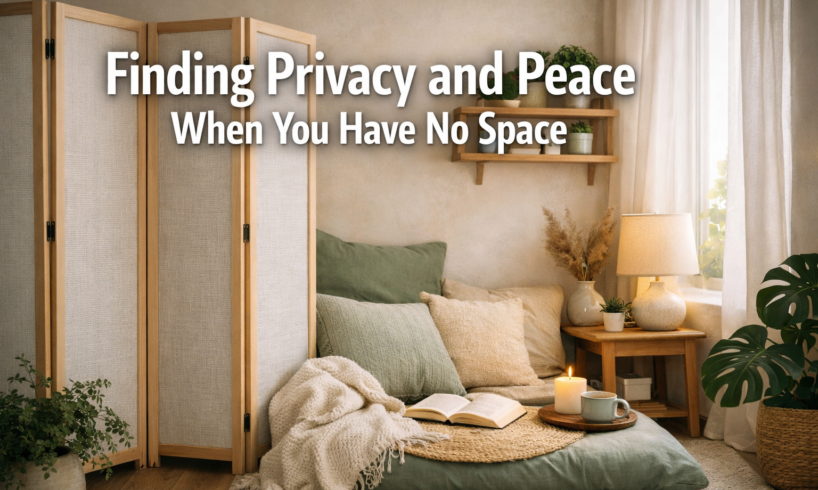
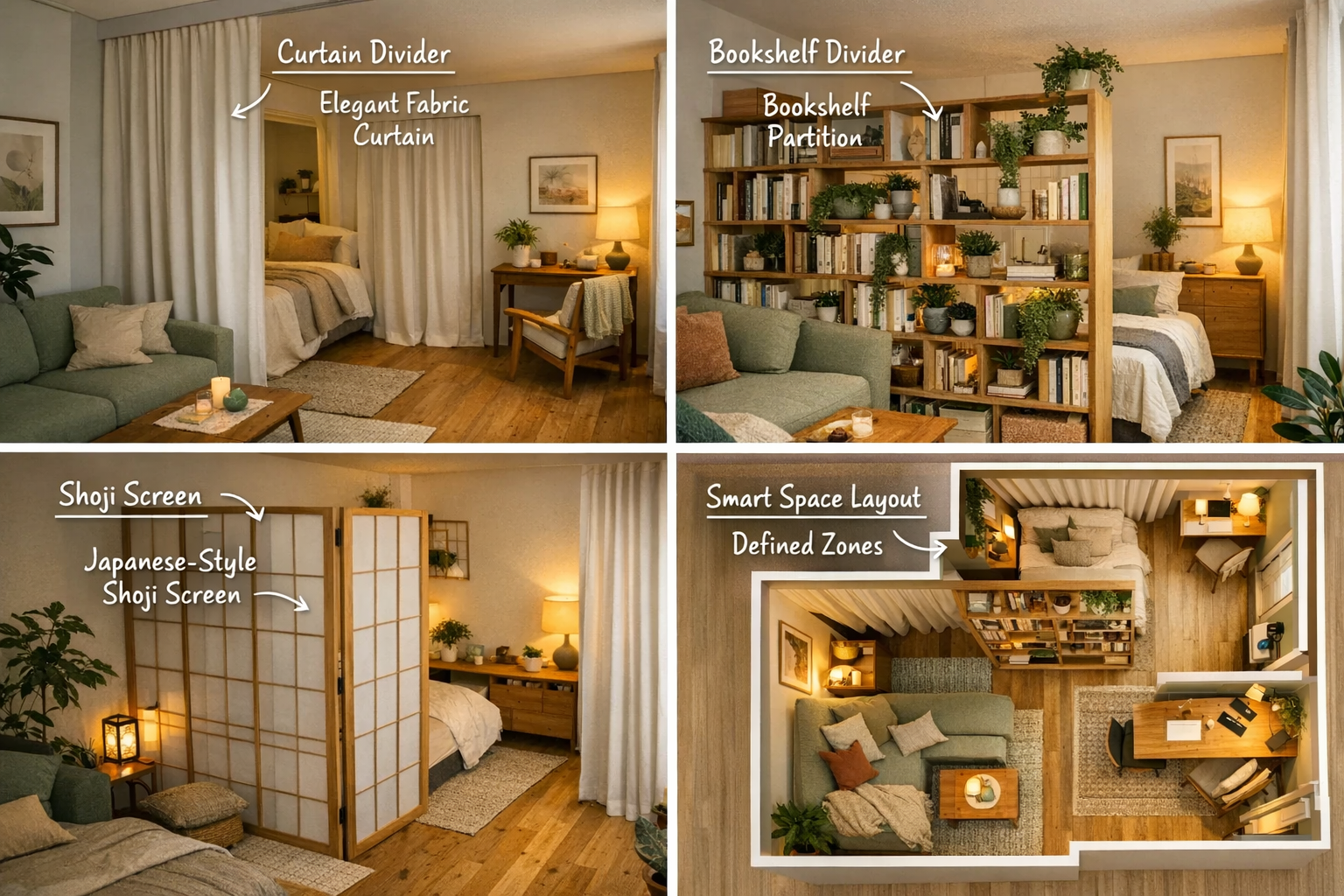
Folding screens offer the most flexibility. Choose screens between 5.5 and 6 feet tall to create visual separation without making the space feel smaller. Three or four-panel screens can angle around a chair or bed to create a private nook.
Curtain dividers work well for renters because they require minimal installation. Tension rods or ceiling-mounted tracks let you draw curtains when privacy is needed and open them to maximize space. Heavy fabrics provide better sound dampening than sheer materials.
Bookshelf dividers serve double duty as storage and partitions. Open-back shelving maintains airflow and light while creating distinct zones. Place a bookshelf perpendicular to a wall to separate sleeping areas from living spaces.
Tall plants create natural, living barriers. A row of floor plants like fiddle leaf figs, snake plants, or bamboo palms adds greenery while marking territory. Plants also improve air quality and reduce stress.
Strategic Furniture Placement
Position your bed, desk, or reading chair facing away from high-traffic areas. This simple orientation change provides psychological privacy even in open rooms.
Create an L-shaped furniture arrangement using a sofa or bookshelf to define a corner as your personal zone. The furniture acts as a subtle barrier that discourages others from entering without blocking light or airflow.
Choose furniture with built-in privacy features: high-backed chairs, canopy beds with curtains, or loft beds that create private space underneath.
Decision Rule
Choose temporary dividers (curtains, folding screens) if you rent or might move within two years. Choose furniture-based solutions (bookshelves, tall plants) if you own your space or plan to stay long-term and want solutions that add value beyond privacy.
Noise is the biggest complaint in shared and small living situations. Controlling sound creates acoustic privacy and reduces stress significantly.
Sound Blocking Strategies
White noise machines mask intermittent sounds like conversations, footsteps, and street noise. Place them between you and the noise source for maximum effect. Apps like myNoise offer customizable soundscapes if you don’t want to buy a device.
Acoustic panels absorb sound rather than reflecting it. Fabric-wrapped foam panels mounted on walls reduce echo and dampen noise. They’re available in decorative designs that double as wall art.
Heavy textiles throughout a space absorb sound waves. Add thick curtains, area rugs, upholstered furniture, wall tapestries, and fabric wall hangings to reduce noise bounce.
Door draft stoppers block sound from traveling under doors. This simple, inexpensive solution makes a noticeable difference in bedroom privacy.
Active Noise Management
Noise-canceling headphones provide instant acoustic privacy anywhere. Over-ear models with active noise cancellation block ambient sound effectively for work, meditation, or sleep.
Establish quiet hours with roommates or family. Agree on specific times when everyone keeps noise to a minimum. This creates predictable windows of peace even in busy households.
Communicate needs clearly. Let others know when you need quiet time and why. Most people respect boundaries when they understand the reason behind them.
Common Mistake
Don’t try to eliminate all sound. Complete silence can feel unnatural and make small noises more noticeable. Instead, aim for controlled, consistent background sound that masks disruptive noises.
Creating Visual Privacy and Personal Zones
Visual privacy prevents the feeling of being constantly observed. Even in shared rooms, you can create spaces that feel private and personal.
Low-Cost Visual Barriers
Tension rods with curtains install without drilling holes. Place them around your bed, desk area, or meditation corner. When drawn, curtains signal “private time” to others in the space.
Hanging beads or macramé create semi-transparent barriers that define zones without completely blocking light. These work well for creating separation while maintaining an open feel.
Privacy film on windows blocks views from outside without reducing natural light. Frosted or decorative window film provides daytime privacy in ground-floor apartments or rooms facing neighbors.
Designated Personal Zones
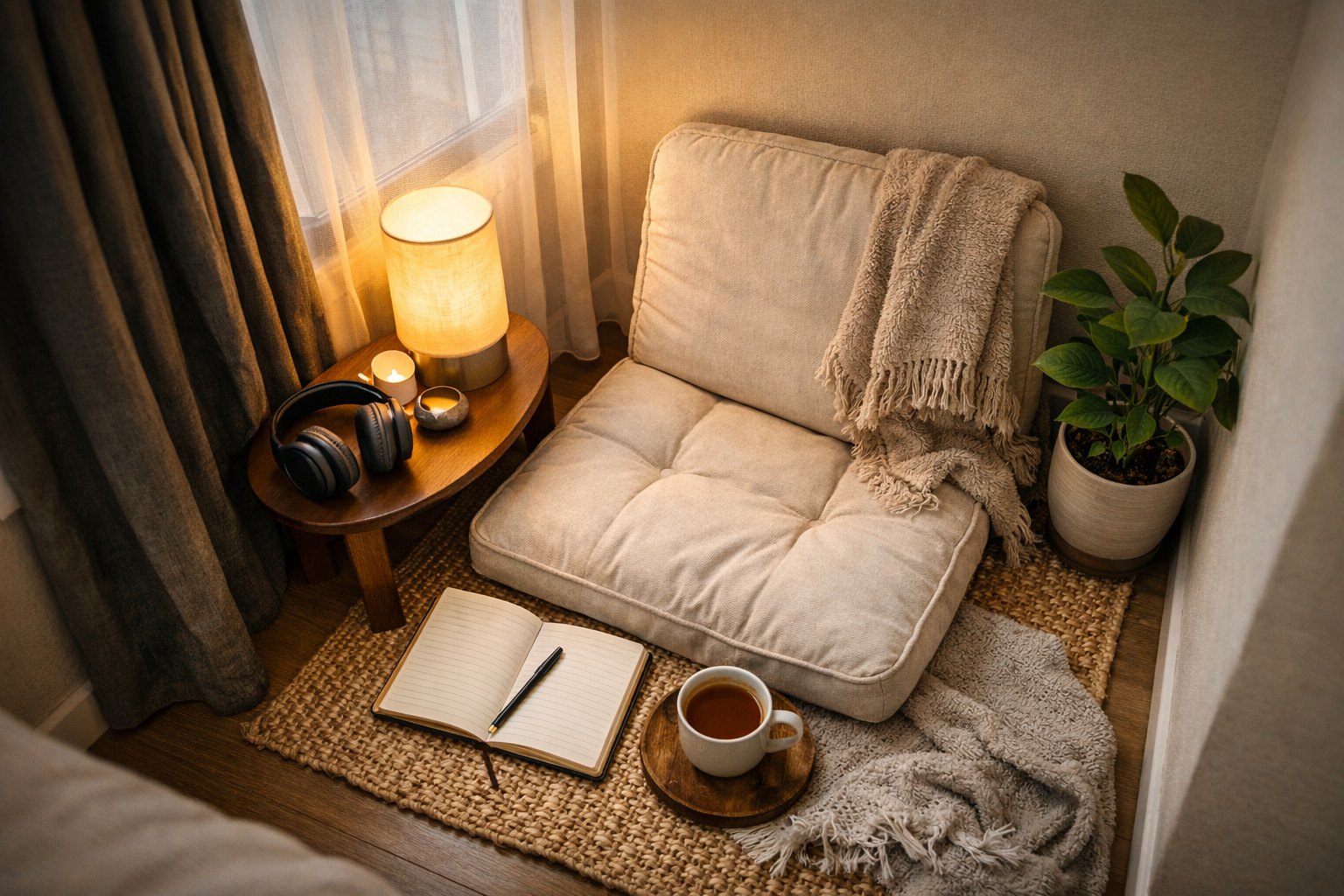
Claim a specific corner, chair, or area as your personal retreat. Communicate this boundary to others: “This chair is my quiet space. When I’m sitting here, I need privacy unless it’s urgent.”
Personalize your zone with items that signal ownership: a specific cushion, throw blanket, small side table, or lamp. Visual cues help others recognize the space as yours.
Use lighting to define zones. Task lighting over your personal area creates a distinct atmosphere separate from overhead lighting. Dimmer switches or smart bulbs let you adjust lighting to match your mood.
Visual Breathing Room
Minimize clutter in your personal zone. Visual chaos prevents mental calm. Keep only essential items in your retreat space.
Choose calming colors for your area. Soft neutrals, blues, and greens promote relaxation. If you can’t paint walls, add these colors through textiles, artwork, or accessories.
Create a focal point that draws your attention inward rather than toward the rest of the space. This might be a piece of art, a window view, a plant, or a decorative object.
When physical space is limited, time becomes the resource you manage for privacy and peace. Scheduling creates predictable windows of solitude even in the busiest households.
Creating a Privacy Schedule
Morning routines often offer the quietest time. Waking 30-60 minutes before others in your household provides uninterrupted personal time for meditation, reading, exercise, or planning your day.
Bathroom time is socially acceptable privacy. A longer shower or bath provides legitimate alone time. Add calming music, aromatherapy, or meditation to maximize this built-in private space.
Coordinate schedules with roommates or family. If someone goes for a run or grocery shopping, use that time for activities requiring privacy. Trade off: “I’ll take the kids to the park Saturday morning so you can have the apartment to yourself, then we’ll switch Sunday.”
Establish “do not disturb” signals that everyone recognizes. This might be headphones on, a specific door sign, a curtain drawn, or sitting in your designated quiet chair.
Activity-Based Boundaries
Certain activities inherently require focus and quiet. Communicate these to others: “When I’m working at my desk with headphones on, please don’t interrupt unless it’s urgent” or “Between 7-8 PM is my reading hour.”
Create transition rituals that signal your shift into private time. Lighting a candle, putting on specific music, or changing into comfortable clothes can mentally separate you from shared space dynamics.
Edge Case: Overnight Shift Workers
If your schedule conflicts with household rhythms, invest in blackout curtains and white noise to create daytime sleeping privacy. Communicate your sleep schedule clearly and post it where others can see it as a reminder.
Mental and Emotional Strategies for Finding Peace Without Space
Physical solutions only go so far. Mental strategies create internal peace regardless of external conditions.
Mindfulness and Meditation Practices
Meditation doesn’t require a dedicated room. A consistent spot, even just a cushion on the floor, becomes your meditation space through repeated use. Start with 5-10 minutes daily.
Focused breathing creates instant calm anywhere. The 4-7-8 technique (inhale for 4 counts, hold for 7, exhale for 8) activates the parasympathetic nervous system and reduces stress in under a minute.
Body scan meditation works well in small spaces because you can do it lying in bed or sitting in a chair. Systematically relaxing each body part creates peace without requiring movement or space.
Establishing Mental Boundaries
Practice saying no to demands on your time and attention. Protecting your schedule creates space for peace even when physical space is limited.
Limit information intake. Constant news, social media, and notifications create mental clutter. Establish tech-free times or zones within your small space.
Accept what you can’t control. Living in a small space means accepting some noise, interruptions, and lack of perfect privacy. Fighting this reality creates more stress than adapting to it.
Sensory Grounding Techniques
The 5-4-3-2-1 method brings you into the present moment: identify 5 things you see, 4 you can touch, 3 you hear, 2 you smell, and 1 you taste. This exercise creates mental calm anywhere.
Aromatherapy transforms small spaces. Lavender, chamomile, and sandalwood promote relaxation. Essential oil diffusers, candles, or room sprays add a sensory dimension to your peaceful zone.
Texture and touch provide comfort. Keep a soft blanket, smooth stone, or other tactile object in your personal space for grounding.
Maximizing Small Spaces for Multiple Functions
Small spaces require furniture and design that serves multiple purposes while still supporting privacy and peace.
Multi-Functional Furniture Solutions
Murphy beds fold into walls, transforming bedrooms into living spaces during the day. This separation of sleep and waking activities improves both functionality and mental boundaries.
Storage ottomans provide seating, storage, and footrests. Place one in your personal corner to define the space while adding utility.
Folding desks and tables can be set up for work or hobbies and then stored away, allowing the same space to serve different purposes at different times.
Loft beds create private sleeping areas above and usable space below. The elevated position provides psychological separation from the main floor area.
Vertical Space Utilization
Wall-mounted shelves keep floors clear while providing storage. Open shelving can also serve as visual dividers between zones.
Hanging organizers maximize vertical space in closets and on walls. Reducing floor clutter makes small spaces feel larger and more peaceful.
Tall, narrow furniture draws the eye upward and uses vertical rather than horizontal space. This creates more floor area for movement and designated zones.
Quick Comparison: Space-Saving Furniture
| Solution | Privacy Benefit | Space Saved | Cost Range | Best For |
|---|---|---|---|---|
| Folding screen | High visual privacy | Folds flat when not needed | $50-$300 | Renters, flexible needs |
| Murphy bed | Separates sleep/wake zones | 15-25 sq ft floor space | $800-$3,000 | Studios, small bedrooms |
| Room divider bookshelf | Moderate visual privacy + storage | Vertical space use | $100-$500 | Permanent residents |
| Curtain track system | High visual privacy | Minimal when open | $30-$150 | Renters, budget-conscious |
| Loft bed | Elevated sleep privacy | Creates usable space below | $200-$1,200 | High ceilings, young adults |
Common Mistakes When Trying to Find Privacy and Peace in Small Spaces
Avoiding these pitfalls will make your privacy and peace strategies more effective.
Mistake 1: Over-Dividing the Space
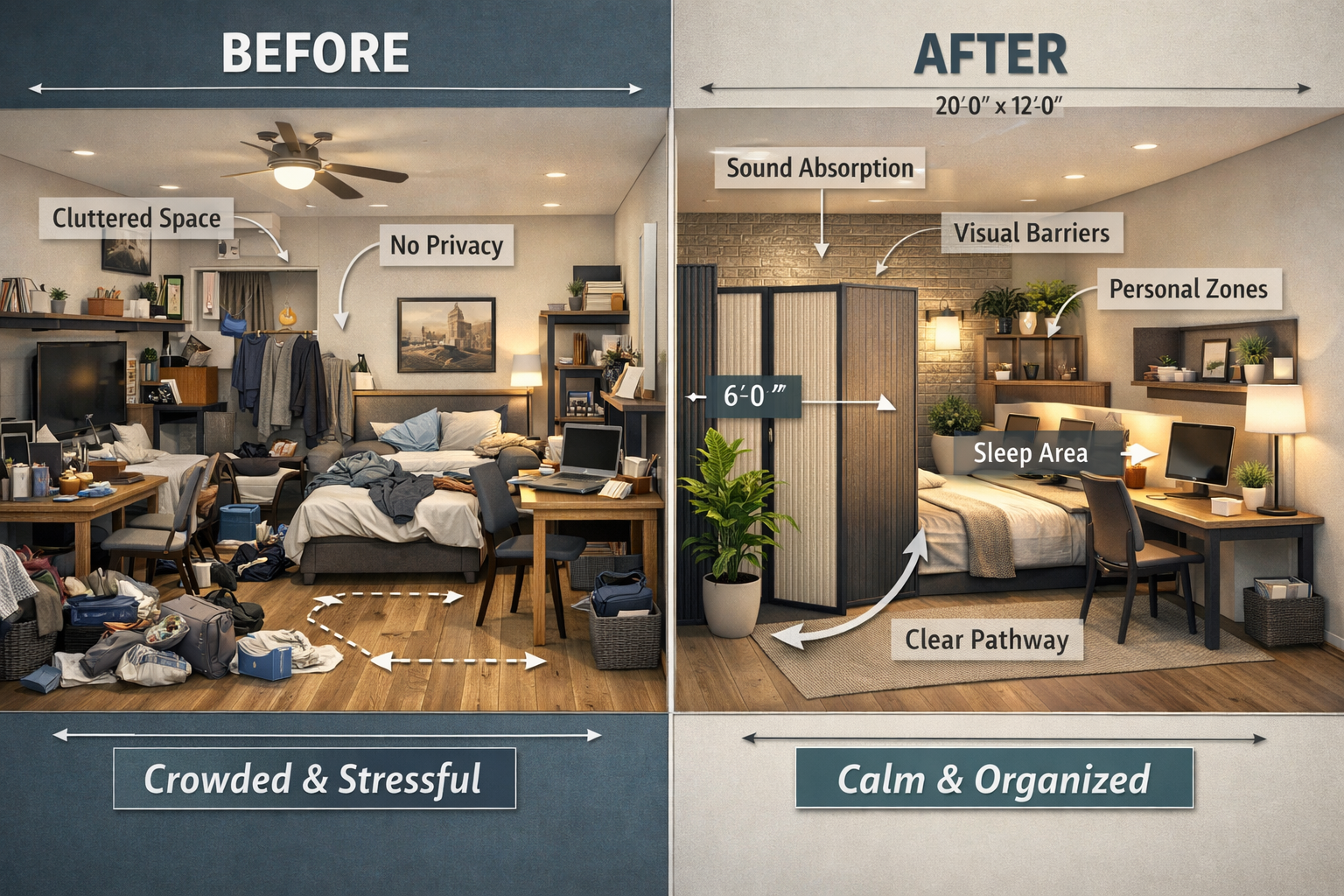
Adding too many partitions makes small spaces feel cramped and claustrophobic. One or two strategic dividers work better than multiple barriers that chop the room into tiny sections.
Better approach: Use one main divider to create two zones, then use lighting, rugs, and furniture placement to define smaller areas within those zones.
Mistake 2: Blocking Natural Light
Privacy solutions that block windows make spaces feel smaller and darker. Natural light is essential for mood and wellbeing.
Better approach: Use sheer curtains, frosted window film, or partial dividers that provide privacy without eliminating daylight.
Mistake 3: Not Communicating Boundaries
Assuming others will intuitively understand your need for privacy leads to frustration and conflict. People can’t respect boundaries they don’t know exist.
Better approach: Have explicit conversations about privacy needs, quiet hours, and personal space. Post visual reminders if helpful.
Mistake 4: Perfectionism
Waiting for the perfect privacy solution or ideal peaceful space means you never actually create what you need. Small improvements compound over time.
Better approach: Start with one simple change (a curtain, headphones, a quiet hour agreement) and build from there.
Claiming too much space or time for yourself without considering others’ needs creates resentment in shared living situations.
Better approach: Negotiate fairly. If you need the living room for yoga at 6 AM, offer your roommate first claim on another space or time.
Budget-Friendly Solutions for Privacy and Peace
Creating privacy and peace doesn’t require expensive renovations. These low-cost solutions deliver results.
Under $25 Solutions
- Tension rods and bed sheets as curtain dividers ($15-20)
- Draft stoppers for under doors ($8-15)
- Eye masks and earplugs for sleep privacy ($5-20)
- Command hooks for hanging fabric dividers without damage ($10-15)
- Thrift store room dividers or folding screens ($10-25)
$25-$100 Solutions
- White noise machine or app subscription ($25-50)
- Blackout curtains for windows ($30-80)
- Acoustic foam panels (4-pack, $25-60)
- Quality noise-canceling earbuds ($40-100)
- Area rug for sound absorption ($40-100)
- Tall indoor plant as natural divider ($30-70)
$100-$300 Solutions
- Folding room divider screen ($100-250)
- Over-ear noise-canceling headphones ($150-300)
- Bookshelf room divider ($120-300)
- Ceiling-mounted curtain track system ($100-200)
Free or Nearly Free Solutions
- Rearrange existing furniture to create zones (free)
- Establish quiet hours with household members (free)
- Use existing blankets or tapestries as temporary dividers (free)
- Meditation and breathing exercises (free)
- Schedule coordination for alone time (free)
Troubleshooting: When Standard Solutions Don’t Work
Some living situations present unique challenges that require creative problem-solving.
Challenge: Roommate Won’t Respect Boundaries
If conversations about privacy needs aren’t working, document your requests in writing (text or email) to create a record. If you’re both on a lease, involve the landlord or request mediation. In extreme cases, this may be grounds for breaking a lease early.
Immediate solution: Invest in high-quality noise-canceling headphones and visual barriers you control (curtains around your bed, privacy screen). Focus on what you can control while working on the larger issue.
Challenge: Truly Zero Personal Space
In situations like shared bedrooms in shelters, military barracks, or dormitories with no private zones, focus on portable privacy: headphones, eye masks, scheduled bathroom time, and outdoor spaces where you can be alone.
Time-based privacy becomes essential. Wake early or stay up late for solitude. Use commute time, lunch breaks, or library visits as your private moments.
Challenge: Noise You Can’t Control
If you live above a loud business, near train tracks, or with neighbors who ignore noise complaints, layered sound solutions help: white noise machine + noise-canceling headphones + acoustic panels + heavy curtains. Each layer reduces noise incrementally.
Consider whether the situation is temporary and tolerable or if it’s affecting your health enough to justify moving.
Challenge: No Natural Light
Basement apartments or windowless rooms make privacy solutions that block light less of a concern, but lack of daylight affects mood and sleep cycles.
Compensate with: full-spectrum light bulbs that mimic daylight, a dawn simulation alarm clock, and spending time outside daily. Your privacy solutions can be less transparent since you’re not protecting natural light.
Long-Term Strategies: Building Sustainable Peace in Small Spaces
Quick fixes provide immediate relief, but sustainable peace requires ongoing practices and mindset shifts.
Develop a Minimalist Mindset
Less stuff means more space—both physical and mental. Regularly declutter your small space. Keep only items that serve a purpose or bring genuine joy.
One in, one out rule: When you acquire something new, remove something old. This prevents accumulation that makes small spaces feel chaotic.
Establish Consistent Routines
Predictable routines create structure that feels peaceful even in chaotic environments. Morning and evening rituals provide bookends of calm to your day.
Habit stacking builds peace practices into existing routines. Meditate while your coffee brews. Do breathing exercises during your commute. Practice gratitude while brushing your teeth.
Invest in Quality Over Quantity
In small spaces, every item matters. One excellent noise-canceling headphone provides more peace than five cheap alternatives. One beautiful, functional room divider works better than multiple makeshift solutions.
Prioritize what matters most to your specific peace needs. If sound is your main issue, invest there. If visual privacy matters most, focus your budget on effective dividers.
Build a Support System
Connect with others in similar situations. Online communities for small-space living, minimalism, and intentional living offer ideas and emotional support.
Communicate regularly with people you share space with. Check in monthly about what’s working and what needs adjustment. Relationships require maintenance.
Plan for the Future
If your current space truly can’t meet your privacy and peace needs long-term, create an exit strategy. Set financial goals for moving to a better situation. Research housing options. Having a plan reduces the stress of feeling trapped.
Reframe temporary situations. If you’re in a small space for a specific period (finishing school, saving money, temporary job), remind yourself this is temporary and focus on making the best of it.
Frequently Asked Questions
How can I get privacy in a studio apartment?
Use room dividers like folding screens or curtains to separate sleeping areas from living spaces. Create visual and acoustic privacy with white noise machines, strategic furniture placement, and designated quiet zones. Time-based privacy through scheduling also helps when physical separation is limited.
What’s the cheapest way to divide a room for privacy?
Tension rods with bed sheets or thrift store curtains cost $15-25 and install without damaging walls. Rearranging existing furniture to create L-shaped barriers or using tall plants as natural dividers are nearly free options that provide visual separation.
How do I find peace when I share a bedroom?
Establish quiet hours with your roommate, use noise-canceling headphones or white noise, create a personal corner with a reading chair or floor cushion, and schedule alone time when your roommate is out. Curtains around your bed provide visual privacy and signal “do not disturb.”
Can noise-canceling headphones really replace having a quiet space?
Quality noise-canceling headphones significantly reduce ambient noise and create acoustic privacy anywhere. They work best for focused activities like work, reading, or meditation but aren’t ideal for sleep. Combine them with other strategies for comprehensive peace.
How do I create boundaries with family in a small home?
Have direct conversations about everyone’s privacy needs. Establish family quiet hours, designate personal spaces even if they’re just specific chairs, use visual signals like closed doors or headphones to indicate “do not disturb,” and respect others’ boundaries consistently so they respect yours.
What if my roommate doesn’t respect my need for quiet?
Document your requests in writing, propose specific solutions like quiet hours or headphone use during certain times, and involve your landlord if you share a lease. If the situation doesn’t improve, this may justify breaking your lease early or requesting a roommate change.
How much space do I need for a meditation corner?
A meditation space can be as small as 3×3 feet—just enough for a cushion or chair. Consistency matters more than size. Using the same spot repeatedly trains your brain to associate that location with calm, making it easier to find peace there.
Are room dividers worth it in very small spaces?
Room dividers work well in small spaces if they’re proportional and strategic. Choose dividers under 6 feet tall to avoid making ceilings feel lower. Folding screens that can be moved or stored when not needed provide flexibility without permanently reducing your space.
How can I soundproof a room without renovating?
Add sound-absorbing materials: thick curtains, area rugs, upholstered furniture, acoustic foam panels, and fabric wall hangings. Seal gaps under doors with draft stoppers. Use white noise to mask remaining sounds. Complete soundproofing requires construction, but these steps significantly reduce noise.
What’s the best room divider for renters?
Tension rod curtain systems work best for renters because they install without drilling holes or damaging walls. Freestanding folding screens and bookshelf dividers are also renter-friendly since they require no installation and move with you.
How do I create privacy from windows in a small space?
Install frosted window film for permanent daytime privacy that maintains light, use sheer curtains for adjustable privacy, or add top-down bottom-up shades that cover the lower window while letting light in from the top. Privacy film costs $15-40 and installs without tools.
Can I find peace in a small space with kids?
Establish naptime or early morning as your peace time, create a personal corner where kids know not to interrupt unless urgent, use the bathroom for brief meditation or breathing exercises, and trade childcare time with your partner or a friend to get regular breaks outside the home.
Key Takeaways: Finding Privacy and Peace When You Have No Space
- Physical privacy doesn’t require permanent walls—curtains, folding screens, and strategic furniture placement create effective boundaries in small spaces
- Sound management is often more important than visual privacy for creating peaceful environments; white noise machines and noise-canceling headphones provide immediate acoustic privacy
- Time-based boundaries work when space-based boundaries aren’t possible—schedule quiet hours, coordinate with roommates, and claim specific times for solitude
- Multiple small solutions compound to create significant improvements; combine visual dividers, sound management, lighting changes, and communication for best results
- Mental strategies complement physical solutions—meditation, breathing exercises, and mindset shifts create internal peace regardless of external space limitations
- Communication prevents most shared-space conflicts—explicit conversations about boundaries, needs, and schedules help everyone respect each other’s privacy
- Budget-friendly options deliver real results—tension rods with sheets, rearranged furniture, and established routines cost little but significantly improve privacy and peace
- Vertical space and multi-functional furniture maximize small areas—loft beds, wall-mounted storage, and folding furniture create more usable space for designated peaceful zones
- Consistency matters more than perfection—a small, regularly used meditation corner provides more peace than waiting for ideal conditions
- Sustainable peace requires ongoing practice—establish routines, maintain boundaries, declutter regularly, and adjust strategies as your needs and situation change
Conclusion: Your Path to Privacy and Peace Starts Now
Finding privacy and peace when you have no space is absolutely achievable. The strategies outlined here—from physical dividers and sound management to mental practices and communication techniques—work together to create personal sanctuaries even in the smallest living situations.
Start with one simple change today. Maybe that’s hanging a curtain to divide your studio apartment, having a conversation with your roommate about quiet hours, or claiming a specific chair as your personal retreat space. Small improvements build momentum.
Your next steps:
- Identify your primary need: Is sound, visual privacy, or alone time your biggest challenge? Focus your first efforts there.
- Choose one physical solution from the budget-friendly options: tension rod curtains, furniture rearrangement, or a white noise machine.
- Establish one boundary with people you share space with: quiet hours, a do-not-disturb signal, or scheduled alone time.
- Create a simple daily practice: five minutes of meditation, breathing exercises, or quiet reading in your designated peaceful spot.
- Evaluate and adjust after two weeks. What’s working? What needs refinement? Privacy and peace strategies evolve with your needs.
Remember that peace isn’t about having perfect conditions. It’s about creating the best possible environment within your current constraints and developing the mental resilience to find calm despite imperfect circumstances. Your small space can absolutely support the privacy and peace you need—it just requires intention, creativity, and consistent practice.
The privacy and peace you’re seeking are within reach, starting right now, right where you are.