

Why rest feels impossible inside your own house — and how to gently change that
Have you ever noticed how you can sit down at home, finally off the clock, finally done with obligations, and still feel like you can’t fully exhale?
You’re physically present. You’ve technically stopped working. But your shoulders stay tight. Your mind keeps spinning. You scroll your phone without really seeing anything. You glance around the room and somehow everything feels… heavy. The couch that should comfort you just reminds you of the unfolded laundry. The kitchen whispers about dishes. The bedroom doubles as an office, and you can’t remember the last time you looked at your bed without thinking about tomorrow’s alarm.
This isn’t rest. This is just existing in a holding pattern, waiting for energy that never comes.
And here’s what I want you to know right away: you’re not broken, and you’re not doing it wrong.
The truth is, somewhere along the way, our homes stopped being sanctuaries and became something else entirely. They became offices without boundaries. Gyms we feel guilty for not using. Classrooms for kids who never leave. Reminders of everything we haven’t finished. They became spaces where we’re supposed to be productive, present, entertaining, healing, working, parenting, and somehow also… relaxing?
That’s not a small ask. That’s an impossible one.
Your home was never designed to hold this much. And your nervous system was never meant to be “on” in the one place that should let you be “off.”
So if rest feels hard right now, if your own four walls feel more like a pressure cooker than a refuge, you’re not imagining it. You’re not failing. You’re just living in a home that hasn’t been set up to support what you actually need most: the ability to breathe again.
Let’s talk about why this happens — and more importantly, how to gently shift it.
The Real Reason Relaxing at Home Feels So Hard
We’ve been told for years that self-care is the answer. Light a candle. Take a bath. Do some yoga. Buy the right pillow, the perfect paint color, the calming essential oil blend. And sure, those things can be nice. But when you’re sitting in your living room feeling like your chest is still tight, when you can’t seem to settle no matter what you try, the problem isn’t that you’re missing the right product.
The problem is that your home has quietly become a place that asks more of you than it gives back.
And until we name that, until we really look at what’s happening in the space where you’re supposed to rest, no amount of lavender oil is going to fix it.
When Your Home Becomes a To-Do List Instead of a Refuge
Let’s start with the most obvious culprit: everywhere you look, there’s something unfinished.
 The mail pile on the counter. The corner of the room that needs organizing. The closet you’ve been meaning to deal with for six months. The kids’ toys scattered like landmines. The dust you see every time the light hits just right. The plant you forgot to water. Again.
It’s not that any one of these things is a catastrophe. But together? Together they create what researchers call visual noise — a constant low-grade static that keeps your brain in task mode even when your body is trying to rest.
Your brain doesn’t differentiate well between “I need to do this now” and “I need to do this eventually.” It just sees the cue and fires up the stress response. Look at the laundry basket, get a little cortisol spike. Walk past the junk drawer, feel a twinge of guilt. Sit down on the couch, notice three things that need fixing, and suddenly you’re not relaxing — you’re just mentally cataloging your failures.
This is exhausting. And it’s everywhere.
Here’s the hard part: you can’t unsee it once you notice it. The clutter isn’t just physical. It’s cognitive. It’s emotional. Every unfinished task is a tiny open loop in your brain, quietly draining your energy, keeping you in a state of low-level activation that makes true rest nearly impossible.
And the worst part? You probably feel like you should be able to just ignore it. Just relax anyway. Just let it go.
But that’s not how nervous systems work.
“If Rest Feels Hard, It’s Not Your Fault”
Let’s pause here for something important.
If you’re reading this and thinking, “Why can’t I just chill out? Why does everyone else seem fine and I’m the one who can’t relax in my own home?” — I need you to hear this clearly: it’s not a personal failing.
You’re not too sensitive. You’re not broken. You’re not “bad at resting.”
What’s actually happening is that your nervous system is doing exactly what it was designed to do: scan for threat, stay alert, keep you ready to respond. And if your environment is constantly signaling “there’s more to do, there’s more to manage, there’s more to fix,” your body is going to stay in that activated state.
This is especially true if you’re dealing with burnout, anxiety, depression, ADHD, or any form of chronic stress. Your system is already running hot. Your window of tolerance — the zone where you can be calm and present — is narrower. You don’t have the same buffer that someone else might have. So the things that other people can tune out? They hit you harder. The clutter they don’t notice? It feels like static in your brain.
And if you’re carrying emotional load on top of physical tasks — the mental work of remembering everyone’s schedules, anticipating needs, managing the household’s emotional climate, being the one who notices when things need doing — you’re not just tired. You’re depleted in a way that sleep alone can’t fix.
Rest isn’t just about lying down. It’s about your nervous system finally getting the signal that it’s safe to stand down. And if your home is constantly telling you otherwise, rest becomes impossible.
So no, it’s not your fault. It’s just that your environment and your needs are mismatched right now. And that’s something we can actually work with.
📌 Related reading: Why Relaxing at Home Is Harder Than It Should Be (And How to Fix It)
Work-From-Home Life — When You Can’t Clock Out
Here’s a scenario that might feel familiar:
It’s 5:30 p.m. Technically, the workday is over. You close your laptop. Maybe you even move it to another room. You sit down on the couch, ready to decompress.
But your brain? Your brain is still in the meeting from two hours ago. It’s still drafting that email. It’s already worrying about tomorrow’s deadline. You’re physically home, but mentally, you never left.
And the kicker? You are home. You’ve been home all day. Your “commute” was eight steps from the bedroom to the kitchen table. There was no transition, no boundary, no moment where work ended and life began. It all just… blurs.
This is the invisible cost of working from home that nobody warned us about.
Blurred Boundaries: The Job That Follows You Everywhere
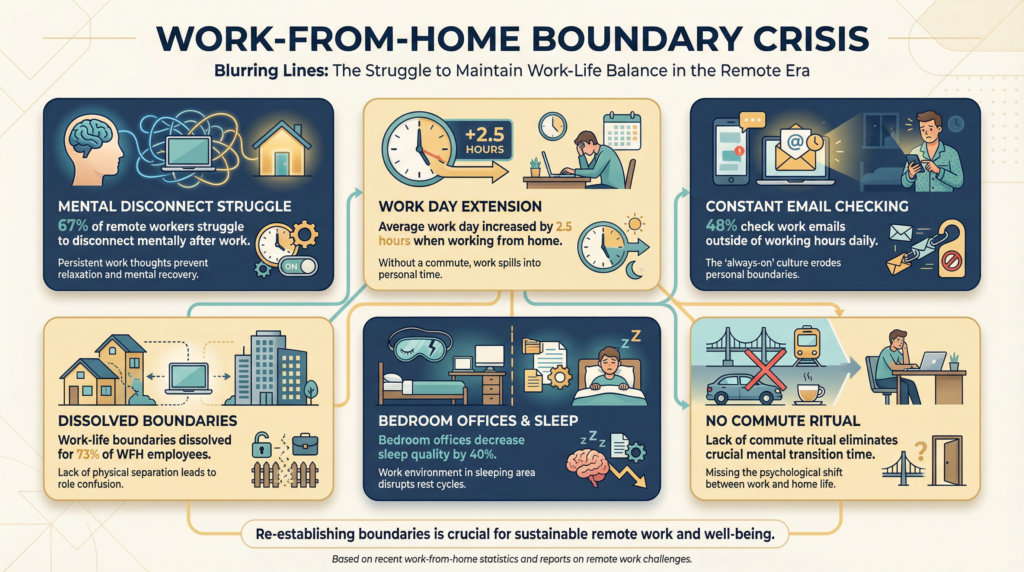
In the before-times, work had a container. You went to an office. You came home. The physical separation created a psychological one. Your brain knew: this is work space, this is home space. The environments were different, and so were the modes you operated in.
But now? Now work lives in your pocket. It lives on the same couch where you watch TV. It lives at the dining table where you eat breakfast. It lives in the bedroom where you’re supposed to sleep. The boundaries aren’t just blurred — they’ve dissolved entirely.
And here’s what happens when that boundary disappears: you’re never fully off.
Even when you’re not working, you’re available to work. You see the notification. You think about the project. You feel guilty for not checking your email. You tell yourself you’ll just do “one quick thing,” and suddenly it’s 9 p.m. and you’ve been working for 12 hours without ever really starting or stopping.
Your nervous system can’t relax in this environment because it never gets a clear signal that the workday is over. You’re in a constant state of “maybe I should be working right now,” which is its own special kind of exhausting.
Why Bedrooms + Laptops Don’t Mix
Let’s talk about the bedroom for a second, because this one matters more than people realize.
If you’re working from your bed, or even just working in your bedroom, you’re training your brain to associate that space with productivity, stress, and activation. And then at night, when you’re trying to sleep, your brain is confused. “Wait, is this work space or sleep space? Should I be alert or should I be winding down?”
Sleep researchers call this stimulus control, and it’s one of the most important factors in healthy sleep. Your bedroom should be strongly associated with rest — with sleep, with calm, with safety. When you muddy that association by bringing work into the space, you make it exponentially harder for your body to shift into sleep mode when you actually need it to.
And it’s not just about sleep. It’s about having any space in your home that’s fully protected from work. A space where you can be without wondering if you should be doing something else.
Simple Ways to Create “Off” Time Again
So how do you fix this when you can’t exactly move to a bigger place or build a home office overnight?
You start small. You create containers where there weren’t any before.
Here are some surprisingly effective boundaries that don’t require renovating your life:
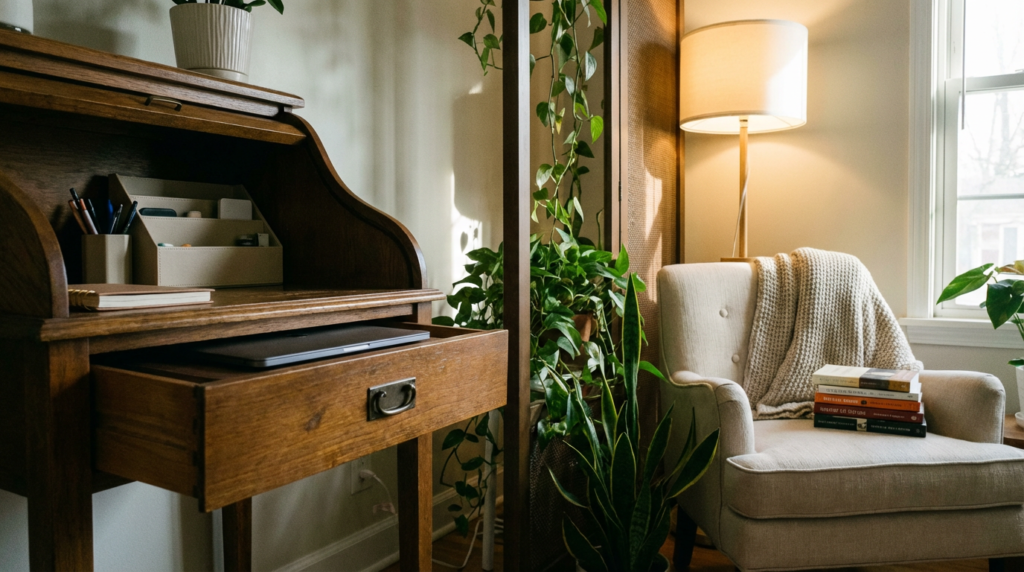
The “end of day” ritual. Even if you work three feet from where you sleep, create a closing routine. Shut the laptop. Put it in a drawer or cover it with a cloth. Change your clothes. Wash your face. Light a candle. Play a specific song. The action doesn’t matter as much as the consistency. You’re teaching your brain: this marks the end. Work is done.
The phone curfew. If your work lives on your phone, your phone can’t live in your hand all evening. Charge it in another room after a certain time. Or use app timers to lock work apps after hours. It feels extreme until you realize how much lighter you feel without the constant possibility of work reaching you.
The “one work-free space” rule. If you can’t keep work out of your whole home, protect one space fiercely. The bedroom. The couch. One corner of the living room. That space is work-free. No laptops, no emails, no thinking about projects. Just rest.
The “office hours” mindset. Even if you’re home, treat your schedule like it has edges. Work starts at X, ends at Y. After Y, you’re off the clock. If something comes up, it waits until tomorrow. This sounds simple, but it’s revolutionary when you’ve been operating without limits.
The goal isn’t perfection. It’s just giving your brain some scaffolding to hold onto, some signal that says, “You can stop now. This part is over.”
📌 Related reading: Creating Work-Life Boundaries When You Work from Home
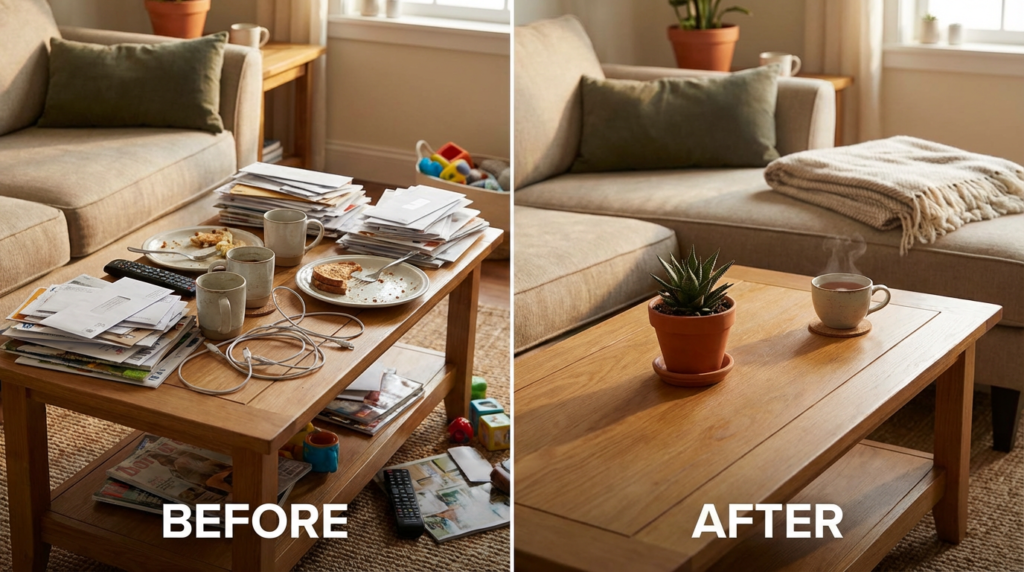
Clutter, Chaos, and That Heavy Visual Noise
Let’s talk about the stuff.
Not in a judgmental, “you should clean more” way. But in an honest, “this is affecting your nervous system” way.
Because the truth is, clutter isn’t just an aesthetic issue. It’s a cognitive one.
Why Mess Makes Your Brain Feel Tense
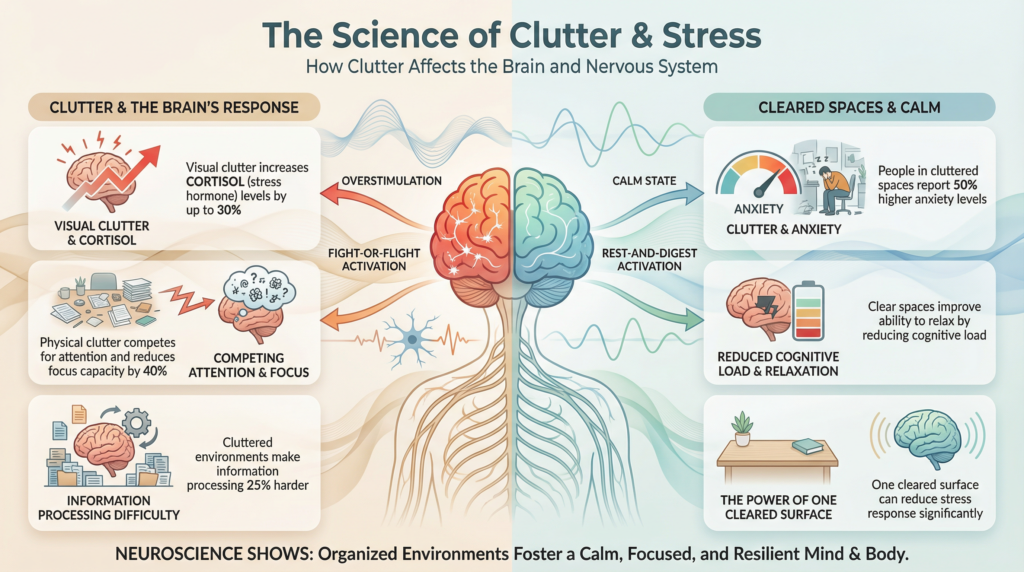
There’s actual science behind why a messy space makes you feel bad. Multiple studies have shown that physical clutter competes for your attention, reduces your ability to focus, and increases cortisol levels — yes, the stress hormone.
When you’re in a cluttered environment, your brain is constantly processing extra information. It’s scanning, categorizing, deciding what’s important and what’s not. It’s reminding you of tasks. It’s making you feel vaguely guilty. It’s pulling your attention in twelve directions at once.
And all of that happens in the background, without you even realizing it. You just feel… tense. Unsettled. Like you can’t quite land.
Princeton neuroscientists found that clutter makes it harder for your brain to allocate attention and process information. It’s literally harder to think clearly when you’re surrounded by chaos. And if you’re already dealing with decision fatigue, mental exhaustion, or overwhelm, the clutter becomes an extra weight you didn’t know you were carrying.
But here’s what makes this complicated: knowing that clutter is stressful doesn’t make it easy to deal with.
When Clutter Isn’t Laziness (Depression, ADHD, Overload)
We need to name something that doesn’t get talked about enough: sometimes clutter isn’t about being messy. It’s about being overwhelmed. It’s about being depressed. It’s about having ADHD and struggling with executive function. It’s about being so burned out that even putting a cup in the dishwasher feels like climbing a mountain.
If you’re someone who looks around at the mess and feels shame — “Why can’t I just keep my space clean like everyone else?” — please hear this: clutter is often a symptom, not a character flaw.
Depression makes everything feel heavier. Tasks that should be simple become monumental. You know you’d feel better if things were tidier, but you can’t seem to make your body do the thing.
ADHD means your brain doesn’t prioritize the same way neurotypical brains do. You genuinely don’t see the mess the same way. Or you see it, but you can’t figure out where to start. Or you start and then get distracted halfway through, and now there are three half-finished projects making everything worse.
Chronic stress and overwhelm mean you’re running on empty. Your bandwidth is gone. You’re using every ounce of energy just to get through the day. Cleaning? Organizing? That’s not even on the list of possibilities.
So if you’re struggling with clutter, the first step isn’t to force yourself to clean harder. It’s to recognize what’s actually happening and meet yourself there.
Small Wins That Restore Calm Fast
Okay, so what do you do?
You don’t overhaul your entire home. You don’t spend a weekend purging everything you own. You definitely don’t try to Marie Kondo your way to serenity when you’re already exhausted.
Instead, you go small and strategic.
Here’s what actually works when you’re starting from empty:
The “one surface” rule. Pick one surface — the coffee table, the nightstand, the kitchen counter — and clear it completely. Just one. Keep it clear for a few days. Notice how your brain feels when you look at that space. Let that be your anchor.
The “visual reset” method. You don’t have to organize everything. Just get it out of sight. Toss everything into a basket or a box. Shove it in a closet. It’s not dealt with, but it’s also not in your face. Sometimes that’s enough to let your nervous system settle.
The “timer trick.” Set a timer for five minutes. That’s it. Five minutes of putting things away, wiping down a surface, clearing a space. When the timer goes off, you’re done. No guilt. No pressure to keep going. Just five minutes, and you’ve already made progress.
The “one category” approach. Instead of “clean the whole room,” try “put away all the cups” or “gather all the shoes” or “deal with the mail.” One category. One small win. Then stop.
The goal isn’t perfection. The goal is creating small pockets of calm that your brain can rest in. Even one clear surface can become a little island of peace in the chaos.
📌 Related reading: How to Declutter Your Home and Space
Here’s a reality that doesn’t get enough airtime: not everyone has the luxury of space.
Maybe you’re in a studio apartment. Maybe you’re sharing a two-bedroom with three other people. Maybe you have kids who are always, always there, and there’s no door that closes, no room that’s just yours, no moment in the day when you’re truly alone.
Privacy isn’t just a nice-to-have. It’s a fundamental human need. And when you don’t have it, when you’re never able to fully let your guard down because someone might need you at any second, it wears on you in ways that are hard to name.
Emotional Exhaustion From “Never Being Alone”
There’s a specific kind of tired that comes from never being off-duty.
It’s not just physical exhaustion. It’s the emotional labor of always being aware of other people. Always modulating your behavior. Always being available. Always being “on” because there’s no space to be “off.”
Even if you love the people you live with, even if they’re not demanding or difficult, the simple fact of constant presence is depleting. You can’t fully relax because part of your brain is always tracking them. Listening for footsteps. Anticipating needs. Managing interactions.
And if you’re someone who’s introverted, or highly sensitive, or dealing with sensory overload, this is exponentially harder. You’re not recharging. You’re just surviving.
Micro-Sanctuaries: Creating Peace in Tiny Pockets
So what do you do when you can’t add square footage? When there’s no extra room, no private corner, no escape hatch?
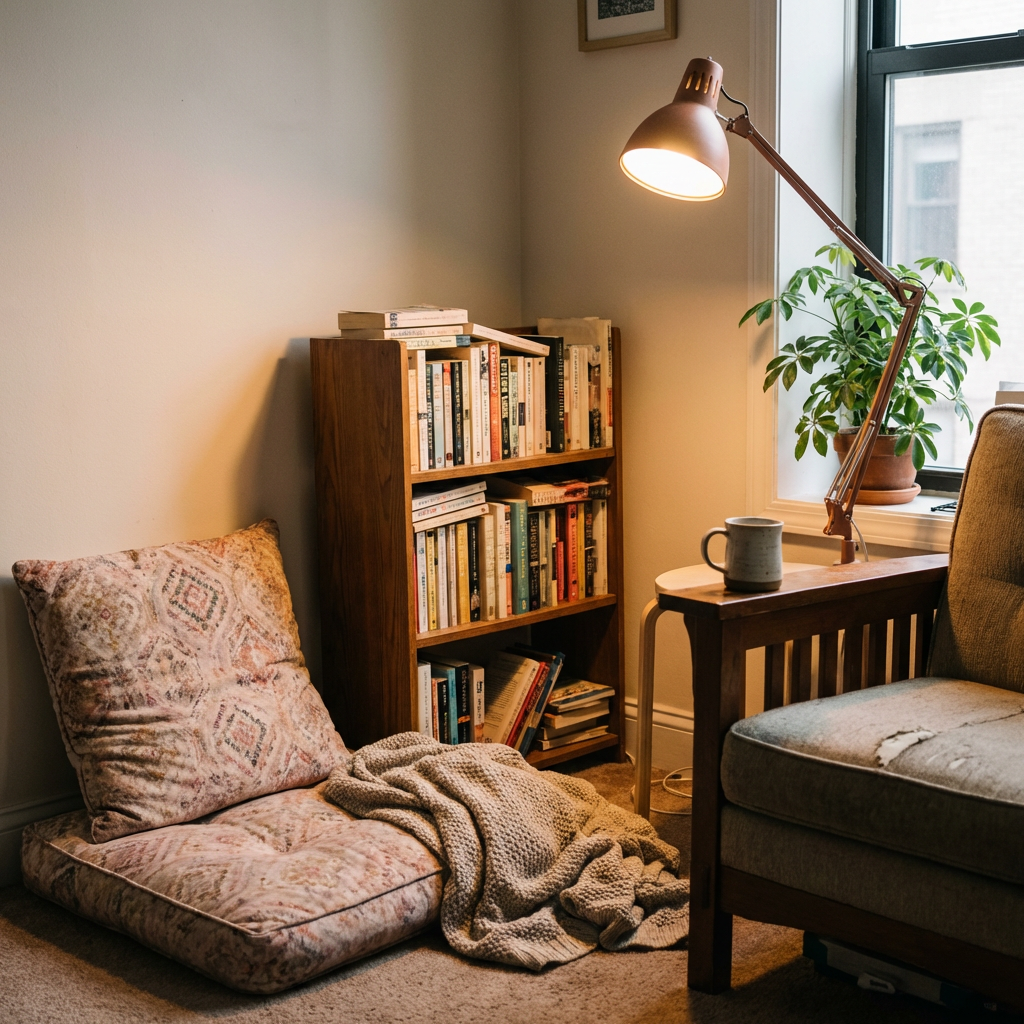
You create micro-sanctuaries. Tiny pockets of space that feel like yours, even if they’re small. Even if they’re temporary.
Here’s what that can look like:
The “corner of calm.” Maybe it’s a chair by the window. Maybe it’s one side of the couch with a specific blanket and pillow. Maybe it’s a floor cushion in the closet (yes, really). You claim it. You make it yours. And when you’re there, that’s your space. Even if it’s only three feet wide.
The “headphones = off-duty” signal. If you live with people, create a clear signal for when you need to not be interrupted. Headphones on means you’re unavailable unless it’s urgent. It’s not rude. It’s a boundary. And boundaries are how we survive shared spaces without losing ourselves.
The “bathroom sanctuary” trick. Sometimes the only room with a lock is the bathroom. So use it. Bring a candle. Sit on the floor with a book. Take a longer shower. Let the bathroom become your five-minute reset space. No shame.
The “time-based privacy” approach. If you can’t have space-based privacy, create time-based privacy. Early mornings before anyone wakes up. Late nights after everyone’s asleep. Lunch breaks when others are out. Carve out windows of time that are yours, even if the space isn’t.
It’s not ideal. It’s not what you’d choose if you had unlimited options. But it’s something. And sometimes, something is enough.
Boundaries Without Guilt
Here’s the hardest part for a lot of people: feeling like you deserve privacy in the first place.
Especially if you’re a parent, especially if you’re a caregiver, especially if you’ve been taught that your needs come last — asking for space can feel selfish. Saying “I need to be alone for 20 minutes” can trigger guilt.
But here’s the truth: you cannot pour from an empty cup, and you cannot rest if you’re never off-duty.
Boundaries aren’t mean. They’re not selfish. They’re not a luxury. They’re how you stay functional. They’re how you show up as a person who’s present instead of just surviving.
And the people you live with? They’ll be okay. In fact, they’ll probably be better off with a version of you who’s had a chance to breathe.
So practice saying it: “I need 20 minutes alone.” “I need to not talk for a bit.” “I need this corner to be mine for now.”
You don’t have to justify it. You don’t have to apologize. You just have to claim it.
📌 Related reading: Finding Privacy and Peace When You Have No Space
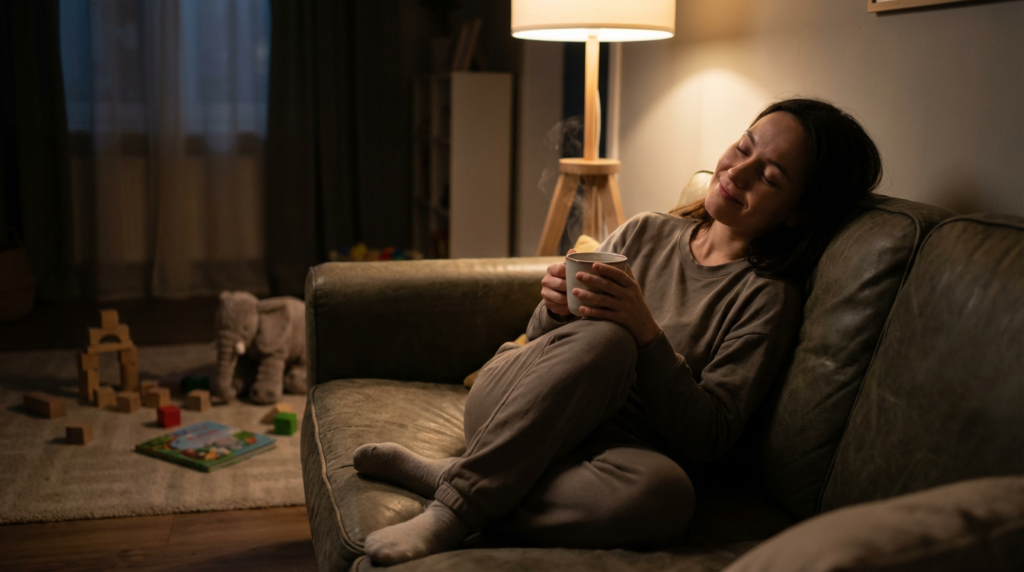
Parenting at Home — When Breaks Don’t Exist
Let’s be honest: if you’re a parent, everything we’ve talked about so far is ten times harder.
Because it’s not just that your home is cluttered or your work boundaries are blurred. It’s that you are never, ever off the clock. Even when the kids are asleep, you’re still on alert. Even when someone else is watching them, you’re still the one tracking snack times and nap schedules and emotional meltdowns.
Parenting at home isn’t just exhausting. It’s a specific kind of relentless that most people don’t fully understand until they’re in it.
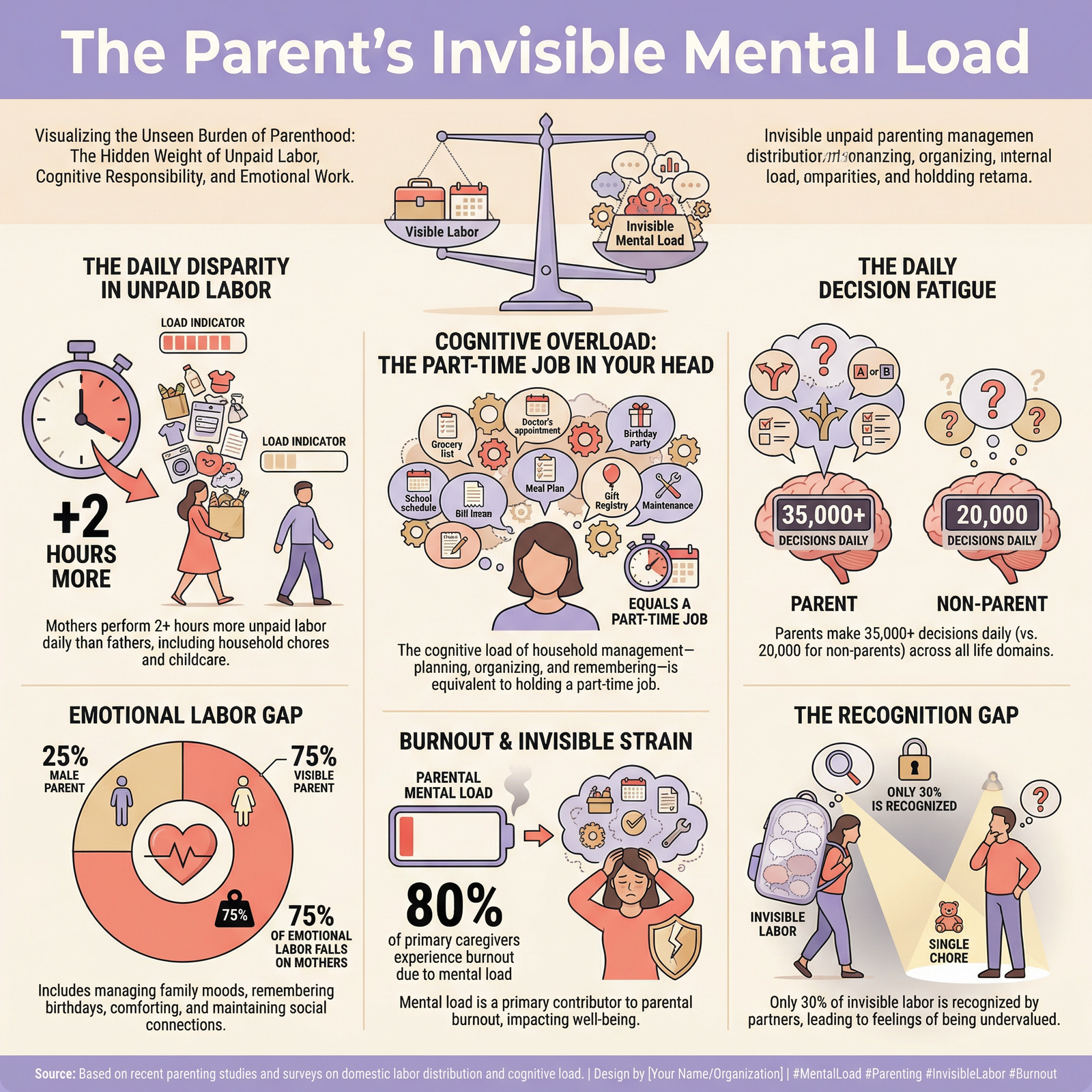
The Invisible Labor Nobody Sees
We talk a lot about physical tasks — the cooking, the cleaning, the laundry, the endless picking up. But the thing that truly drains parents? It’s the invisible labor.
It’s remembering that your kid needs new shoes. It’s keeping track of whose week it is for show-and-tell. It’s noticing that you’re low on diapers before you run out. It’s managing everyone’s emotions, including your own. It’s being the one who anticipates needs, solves problems, makes decisions, and keeps the whole operation running.
This is called cognitive load and emotional load, and it’s exhausting in a way that’s hard to explain to someone who hasn’t carried it.
Because even when you’re sitting down, even when you’re “resting,” your brain is still running through the list. Still scanning for what needs doing. Still holding all the details that would cause chaos if you let them drop.
And the worst part? Most of it is invisible. Nobody sees it. Nobody thanks you for it. And often, nobody realizes you’re doing it until you stop.
Guilt for Wanting Time Alone
Here’s something parents don’t say out loud enough: sometimes you need a break from your kids, and that doesn’t make you a bad parent.
You can love them fiercely and still need them to not need you for 20 minutes. You can adore them and still fantasize about sitting in your car alone. You can be grateful for them and still feel touched-out, talked-out, needed-out.
But admitting that? Feeling that? It comes with so much guilt.
You’re supposed to cherish every moment. You’re supposed to be endlessly patient. You’re supposed to love spending time with them. And you do — but you’re also human, and humans need rest, and kids are objectively exhausting.
So let’s name it plainly: needing a break doesn’t mean you don’t love them. It means you’re a person with limits.
And those limits aren’t a flaw. They’re a feature. They’re what keep you from burning out so completely that you have nothing left to give.
Realistic Ways Parents Can Recover (Not Instagram Self-Care)
Okay, so what actually helps when you’re a parent who can’t take a weekend spa retreat or “just relax” on demand?
You go micro. You go realistic. You go survival-mode practical.
Here’s what actually works when you have zero time and even less energy:
The “quiet time” rule. Even if your kids don’t nap, institute a daily quiet time. Everyone in their room or their corner, doing something quietly, for 30 minutes. You’re not entertaining. You’re not engaging. You’re just existing in parallel. It’s not a break, but it’s a breath.
The “partner swap” or “friend swap.” If you have a co-parent, trade off. One of you takes the kids out of the house for two hours. The other gets the house to themselves. Then you swap. If you’re solo parenting, find another parent and trade childcare. You watch their kids one day, they watch yours another. Everyone gets a real break.
The “good enough” standard. Dinner from a box. TV for an hour so you can lie on the couch. Ignoring the mess because you’re too tired to care. This isn’t failure. This is survival. And survival is success when you’re running on empty.
The “bedtime is sacred” boundary. Once the kids are down, that time is yours. Not for dishes. Not for prep for tomorrow. Not for more caregiving. For rest. For something that refills you, even if it’s just staring at the wall in silence.
The “lower the bar” mantra. You don’t need a bubble bath and a face mask. You need 10 minutes where nobody’s touching you. You need a cup of coffee while it’s still hot. You need to pee alone. Start there. That’s enough.
Parenting is hard. Parenting at home, all the time, with no escape and no backup, is harder. You don’t need to be superhuman. You just need to survive the day and find five minutes to remember you’re a person, not just a parent.
📌 Related reading: How Parents Can Create Recovery Time Without Shame
Noise, Neighbors, and the Sounds You Can’t Escape
Let’s talk about something that doesn’t get enough attention: noise.
Not just loud noise. But the constant hum of life pressing in. The upstairs neighbor who walks like an elephant. The traffic outside your window. The dog barking three doors down. The HVAC system that kicks on every 20 minutes. The refrigerator hum. The people talking in the hallway.
If you live in an apartment, a duplex, a shared building, or just a neighborhood where houses are close together, you know this feeling: you’re never fully alone because you can always hear someone else’s life bleeding into yours.
And it’s maddening.
Why Certain Sounds Spike Stress
Here’s the thing about noise: your brain doesn’t treat all sounds equally.
Predictable, steady sounds — white noise, a fan, rain — tend to fade into the background. Your brain learns to ignore them because they’re constant and non-threatening.
But unpredictable, sudden, or human-generated sounds? Those spike your stress response. Every time.
A door slamming. A baby crying. Footsteps above you. Someone yelling. A car alarm. These sounds trigger your startle response because your brain interprets them as potential threats. You can’t relax because part of you is always listening, always on alert, always anticipating the next interruption.
And if you’re someone who’s already stressed, already burned out, already sensory-sensitive, those sounds don’t just annoy you. They hurt. They feel like a physical intrusion. They make your heart race and your jaw clench and your whole body tense up.
It’s not that you’re being dramatic. It’s that your nervous system is doing its job: responding to stimuli it can’t control.
Coping When You Can’t Control the Building
So what do you do when the noise isn’t yours to stop?
When you can’t exactly ask your neighbor to stop living, or tell the city to quiet the traffic, or move to a new place just because the walls are thin?
You adapt. You mitigate. You create your own buffer.
Here’s what helps:
White noise machines or apps. Not to drown out every sound, but to create a steady baseline that masks the unpredictable spikes. It gives your brain something consistent to latch onto instead of jumping at every new noise.
Foam earplugs or noise-reducing earbuds. Sometimes you need physical separation from the sound. Earplugs for sleeping. Noise-canceling headphones for working or resting. It’s not a perfect solution, but it’s a layer of protection.
Rugs, curtains, and soft materials. Hard surfaces bounce sound around. Soft surfaces absorb it. Adding rugs, heavy curtains, tapestries, or even just blankets to your space can dampen the noise and make it feel less intrusive.
Strategic furniture placement. Put your bed or your couch against an interior wall, not the one you share with neighbors. Put a bookshelf against a noisy wall to create a sound buffer. Small shifts can make a surprising difference.
Communicate (gently, if possible). Sometimes neighbors genuinely don’t realize they’re being loud. A kind note or a quick conversation can help. Not always. But sometimes. And it’s worth a try before you resign yourself to suffering.
Budget-Friendly Quiet Strategies
Let’s be real: most noise solutions cost money. Soundproofing is expensive. Moving is expensive. Noise-canceling headphones are expensive.
But here are some things that aren’t:
- DIY draft stoppers at the base of doors (towels work in a pinch)
- Heavy blankets or quilts hung on walls
- Cardboard egg cartons as makeshift sound dampening (yes, really)
- Free white noise apps or YouTube videos (ocean sounds, rain, brown noise)
- Rearranging furniture to create distance from noise sources
- Using fans for both airflow and sound masking
It’s not perfect. It’s not professionally soundproofed. But it’s something. And sometimes, taking even a small action makes the situation feel less helpless.
📌 Related reading: Quieting Your Home (Even When You Can’t Control the Noise)
When Home Feels Lonely Instead of Peaceful
Here’s a paradox that doesn’t get talked about enough: sometimes the problem isn’t that home is too chaotic. It’s that it’s too quiet.
Too empty. Too still. Too lonely.
You wanted peace, but what you got was isolation. And now you’re sitting in your space, finally alone, finally quiet, and instead of feeling calm, you just feel… hollow.
This is its own kind of hard.
The Hidden Toll of Isolation
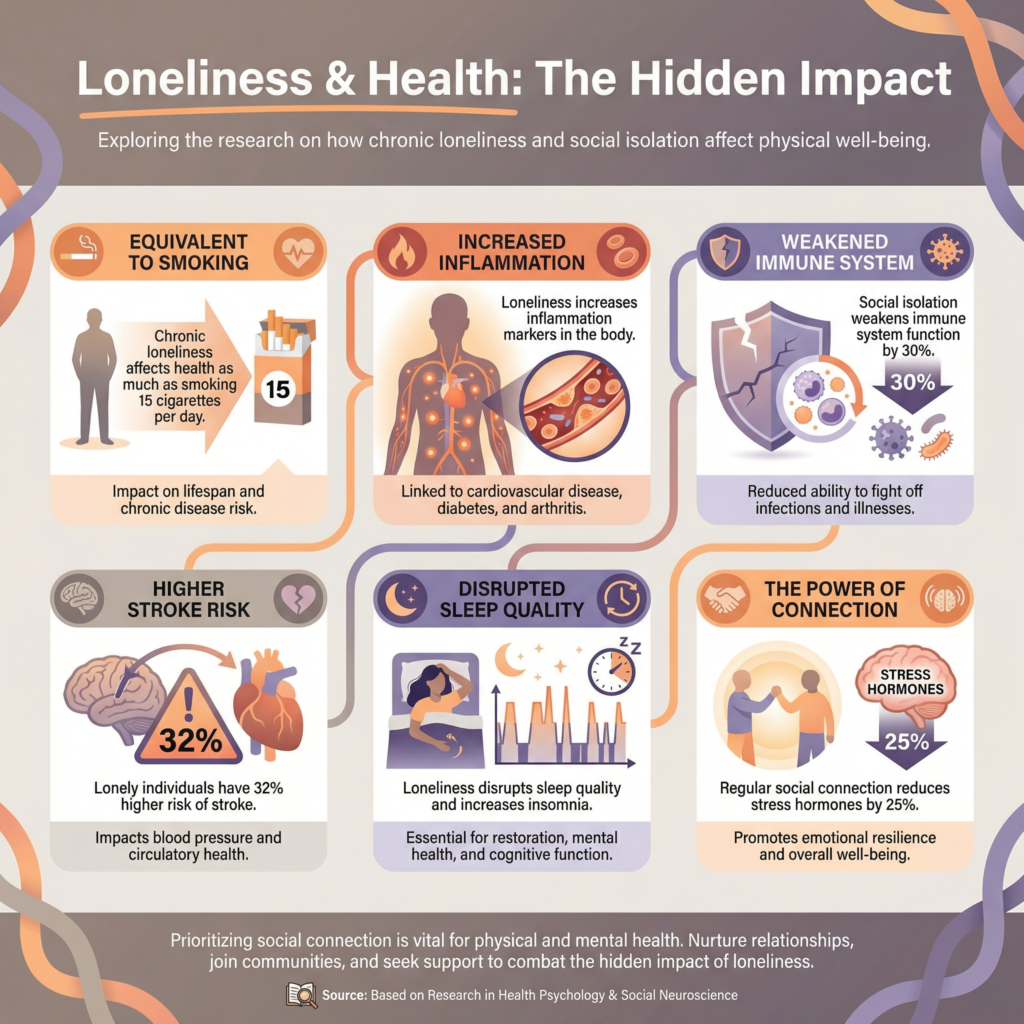
Humans are wired for connection. Not constant connection, not always-on social interaction, but regular, meaningful contact with other people. We need to feel seen. We need to feel like we matter. We need to know we’re not just floating through life alone.
And when home becomes the only place you are — when you work from home, when you don’t have a commute, when your social life has shrunk, when you haven’t had a real conversation in days — loneliness stops being a feeling and starts being a condition.
It’s not just sad. It’s physiologically stressful. Studies show that chronic loneliness affects your health as much as smoking or obesity. It increases inflammation, disrupts sleep, weakens your immune system, and messes with your mental health.
And the cruelest part? Loneliness makes it harder to reach out. It convinces you that nobody wants to hear from you. That you’re bothering people. That you should just stay quiet and not be a burden.
So you sit in your home, feeling lonely, and the silence gets louder, and the walls close in a little more each day.
Rebuilding Connection Without Forcing Social Life
Here’s what doesn’t help: telling yourself you should just “go out more” or “make plans” or “be more social” when you’re already depleted.
Because the truth is, when you’re lonely and exhausted, forced socializing often makes it worse. You end up feeling even more disconnected because you’re performing instead of connecting.
So what actually helps?
Start small. Start online. Start in ways that don’t require leaving the house or performing energy you don’t have.
Here’s what that looks like:
Text someone. Just one person. Just a simple “thinking of you” or “hey, how are you?” You’re not asking for a hangout. You’re just reminding someone you exist and that they exist. That’s connection.
Join an online community. A Discord server, a subreddit, a Facebook group for something you care about. You don’t have to participate actively. Just being around people who get you, even digitally, can ease the loneliness.
Voice or video call instead of text. Hearing someone’s voice, seeing their face — it hits different than words on a screen. It feels more real. More human. Even 10 minutes can help.
Parallel play for adults. Video call a friend and just… exist together. Both of you doing your own thing, occasionally chatting, but mostly just being in each other’s presence. It’s connection without pressure.
Reconnect with an old friend. Someone you’ve been meaning to reach out to but haven’t because it’s been too long and it feels awkward. Do it anyway. Most people are delighted to hear from you, even after years.
The goal isn’t to fill your calendar. It’s just to remind yourself that you’re not as alone as you feel. That connection is still possible, even in small doses.
Finding Meaning and Community From Inside
Sometimes the loneliness isn’t just about missing people. It’s about missing purpose. Missing the feeling that you’re part of something bigger than yourself.
And you can start rebuilding that from home:
Volunteer online. Crisis text lines, remote tutoring, moderating for a cause you care about. Helping others is one of the fastest ways to feel connected and purposeful.
Create something and share it. Write. Draw. Make music. Post it somewhere. Let people see it. You don’t need to go viral. You just need to put something of yourself into the world and let it connect with even one other person.
Join a virtual class or group. Book clubs, art classes, game nights, support groups. Scheduled, recurring connection with people who share your interests.
Support others in small ways. Comment on someone’s post. Encourage a stranger. Send a card. Tiny acts of kindness create ripples of connection.
You don’t have to solve loneliness overnight. You just have to take one small step toward reminding yourself that you’re part of a larger human web, even when it doesn’t feel like it.
📌 Related reading: When Home Feels Lonely: Rebuilding Connection from Inside
Burnout — When Even Rest Feels Like Work
Let’s talk about the version of exhaustion that sleep doesn’t fix.
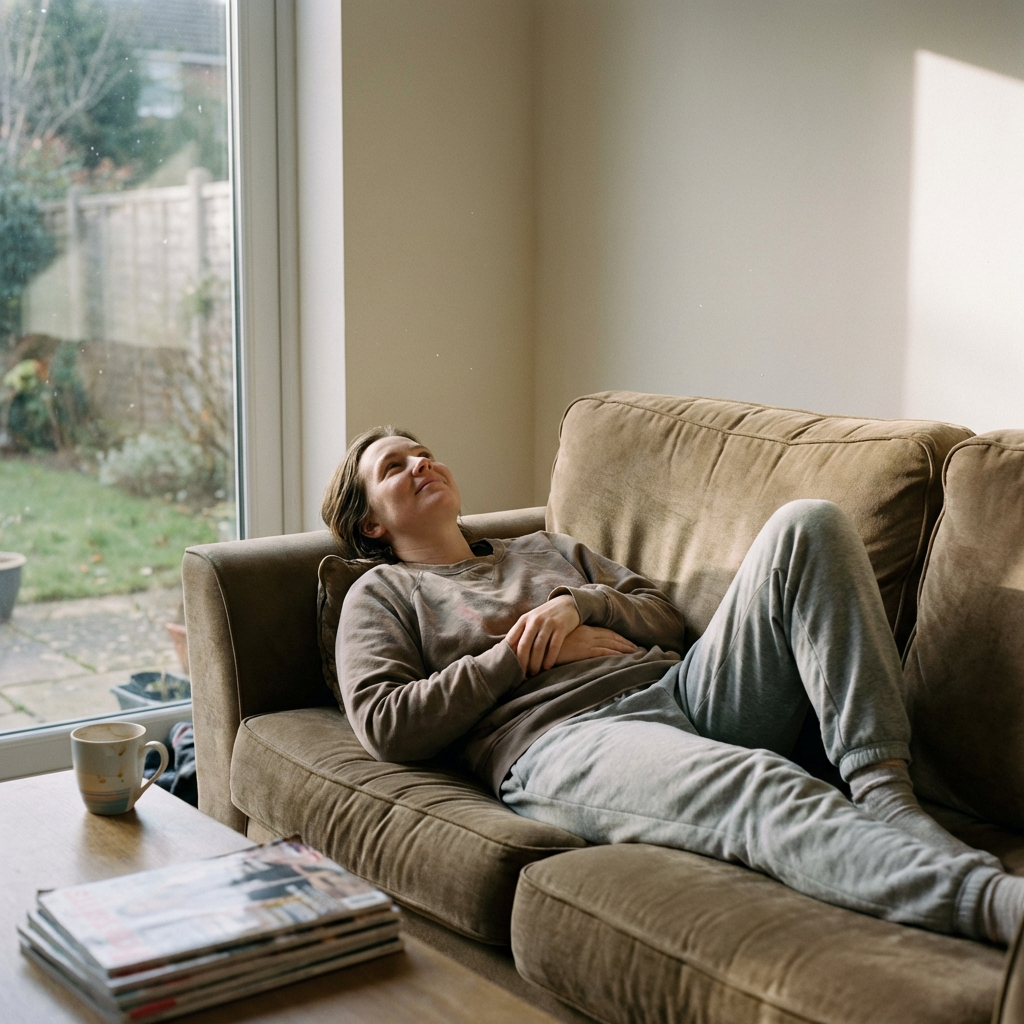
The kind where you wake up tired. Where you look at your to-do list and feel nothing. Where even the things you used to enjoy feel like obligations. Where rest itself has become another thing you’re supposed to do right, another way to fail.
This is burnout. And it’s not the same as regular tiredness.
Why Self-Care Feels Like Another Chore
Here’s the paradox of burnout: you know you need to rest. Everyone keeps telling you to rest. To take care of yourself. To prioritize your well-being.
But when you’re burned out, self-care feels like work.
Taking a bath isn’t relaxing; it’s another task. Meditation isn’t calming; it’s something else you’re failing at. Exercise isn’t energizing; it’s one more thing demanding your depleted resources.
Because burnout isn’t just physical exhaustion. It’s nervous system dysregulation. Your body has been in fight-or-flight mode for so long that it’s forgotten how to do anything else. Your stress response is stuck in the “on” position. And now, even when you try to rest, your body doesn’t know how.
You lie down, but your mind races. You try to relax, but your muscles stay tense. You desperately want to feel calm, but calm feels unreachable, like a language you used to speak but can’t remember anymore.
This is why all the self-care advice in the world doesn’t work when you’re truly burned out. Because the problem isn’t that you’re not trying hard enough. It’s that your system is too dysregulated to receive the rest you’re offering it.
Learning to Do Less (Without Shame)
So what do you do?
You stop trying to fix it with more doing.
The answer to burnout isn’t adding more self-care to your list. It’s subtracting everything you possibly can until you have space to just exist.
This is terrifying for most people. Because we’ve been taught that our worth is in our productivity. That we have to earn rest. That doing less makes us lazy.
But here’s the truth: your body doesn’t care about your to-do list. It cares about survival. And right now, it needs you to stop.
So what does that actually look like?
Cancel things. Not forever. Just for now. Say no. Back out. Reschedule. Disappoint people if you have to. Your bandwidth is gone, and continuing to push will only make the burnout worse.
Lower your standards to the floor. Cereal for dinner. Kids watching extra TV. Wearing the same clothes three days in a row. Letting the house be a mess. These aren’t failures. They’re survival strategies. And survival is the only goal right now.
Stop trying to be productive. You don’t have to make your rest “count.” You don’t have to use your downtime for self-improvement or catching up on projects. You can just… be. Stare at the ceiling. Sit in the sun. Exist without purpose. That’s enough.
Give yourself permission to do nothing. Not as a break before you get back to work. Not as a reward for finishing your tasks. Just… nothing. Because you’re a human being, and human beings are allowed to simply exist without justifying it.
This feels uncomfortable. It feels wrong. It feels lazy and selfish and irresponsible.
That discomfort is your nervous system learning to downregulate. Let it be uncomfortable. You’re retraining your body to remember that it’s safe to stop.
Re-Training the Nervous System to Calm Down
Healing burnout isn’t about pushing through. It’s about teaching your body that it’s safe to rest again.
And that happens slowly, in tiny increments, through practices that signal safety to your nervous system:
Deep, slow breathing. Not because it’s trendy. Because it physiologically shifts your nervous system from sympathetic (fight-or-flight) to parasympathetic (rest-and-digest). Even two minutes of slow exhales can help.
Gentle movement. Not exercise. Not workouts. Just slow, easy movement. Stretching. Walking. Swaying. Anything that helps your body release the tension it’s been holding.
Warmth. Hot showers, heating pads, warm drinks, sitting in the sun. Warmth signals safety to your nervous system. It tells your body, “You’re okay. You can relax.”
Safe, boring routines. Your nervous system finds comfort in predictability. Same bedtime. Same morning ritual. Same comforting meal. Routines create containers of safety when everything else feels chaotic.
Connection (when you can). Talking to a safe person. Being around someone who doesn’t need anything from you. Physical touch if you have access to it (hugs, hand-holding, petting an animal). Co-regulation — being in the presence of a calm nervous system — helps your own system remember how to calm down.
It won’t happen overnight. Burnout doesn’t heal in a week. But small, consistent signals of safety will, over time, help your nervous system find its way back to baseline.
You’re not broken. You’re just stuck in a stress response. And you can, gently, teach your body how to get unstuck.
📌 Related reading: Healing Burnout from the Inside Out — Starting at Home

Phones, Screens, and the False Promise of “Relaxing”
Let’s talk about what most of us do when we’re exhausted and trying to “relax”: we reach for our phones.
We scroll Instagram. We watch TikToks. We refresh Twitter. We fall down YouTube rabbit holes. We tell ourselves we’re resting, but somehow we end up feeling more tired, more anxious, more disconnected than before.
Because here’s the truth: scrolling isn’t rest. It’s just a different kind of work.
Doomscrolling vs. Actual Recovery
Your brain on social media isn’t relaxed. It’s activated.
Every post is a tiny hit of novelty. Every notification is a dopamine ping. Every scroll is a micro-decision: do I care about this? Should I react? What do I think? Am I missing something?
Your brain is processing information at rapid speed, jumping between topics, managing emotional reactions, comparing yourself to others, absorbing bad news, feeling outrage, feeling envy, feeling FOMO — all while you’re sitting still thinking you’re doing nothing.
This is called continuous partial attention, and it’s exhausting. You’re never fully focused, but you’re never fully resting either. You’re just in this weird in-between state where your brain is busy but not in a satisfying way.
And if you’re doomscrolling — consuming a constant feed of bad news, outrage, tragedy, and stress — you’re actively keeping your nervous system in fight-or-flight mode. You’re literally filling your brain with threats, and then wondering why you feel anxious.
Your phone isn’t helping you relax. It’s just numbing you enough that you don’t notice how unrelaxed you are.
Gentle Digital Boundaries (That Don’t Feel Restrictive)
Okay, but let’s be real: telling someone to “just put down your phone” when you’re exhausted and it’s the only easy thing available? That’s not helpful.
So let’s talk about boundaries that actually feel doable.
The “not in bed” rule. If you do one thing, do this: keep your phone out of your bedroom, or at least across the room. Not next to your bed. Because the minute it’s within reach, you’ll scroll before sleep and first thing in the morning, and both of those times are when your brain is most vulnerable to whatever you’re consuming.
The “buffer time” approach. No screens for the first 30 minutes after you wake up, and the last 30 minutes before sleep. Give your brain time to ease into and out of the day without immediately flooding it with information.
The “one app at a time” trick. Instead of mindlessly bouncing between apps, pick one. Watch one video. Read one article. Then put the phone down. Intentional use, not autopilot scrolling.
The “set a timer” method. If you’re going to scroll, set a timer for 15 minutes. When it goes off, you stop. You don’t have to quit cold turkey. You just have to add a boundary so it doesn’t eat your whole evening.
The “replace, don’t remove” strategy. If you take away the phone, you need something else to do. Keep a book nearby. Have a puzzle. Put on music. Give your brain an alternative that’s actually restful, not just another void to fill with scrolling.
The goal isn’t to demonize your phone. It’s just to recognize when it’s helping and when it’s not. And most of the time, when you’re exhausted and reaching for it, it’s not actually helping. It’s just the easiest option.
What to Do Instead When You’re Exhausted
So what do you actually do when you’re too tired to do anything, but scrolling isn’t really helping?
You do truly low-effort rest. Things that don’t require you to perform or produce or even think very hard.
Here are some things that actually let your brain rest:
Lie down and listen to music. Not as background noise while you do something else. Just listen. Let your brain follow the melody. Let your body be still.
Stare out the window. Seriously. Watch the trees. Watch the sky. Watch people walk by. Let your brain wander without directing it anywhere.
Take a shower or bath. The sensory experience — warmth, water, quiet — can reset your nervous system in a way that scrolling never will.
Do something with your hands. Doodle. Knit. Play with clay. Fold laundry slowly. Gentle, repetitive movement that doesn’t require brain power but gives you something to do.
Sit with a pet (or stuffed animal, no judgment). Physical comfort. Warmth. Softness. No demands. Just presence.
Listen to a podcast or audiobook. Something soothing, not stimulating. A calm voice telling a story. Let yourself rest while someone else does the narrative work.
Just sit. Do nothing. Be bored. Let your brain have space to process and reset without filling every second with input.
It feels weird at first. It feels boring. It might even feel uncomfortable.
That discomfort is your brain detoxing from constant stimulation. Let it happen. Boredom is where rest actually lives.
📌 Related reading: How to Rest Without Reaching for Your Phone Every Time
The Bigger Truth: Your Home Should Support You
Here’s what I want you to take away from all of this, if nothing else:
Your home isn’t supposed to be a test you pass or fail. It’s supposed to be a place that supports your actual life.
Not your aspirational life. Not the version of you that has endless energy and time and resources. Your real life. Your real needs. Your real nervous system.
Sanctuary Over Perfection
We’re bombarded with images of perfect homes. The right aesthetic. The perfect organization. The Instagram-worthy corner with the fiddle leaf fig and the neutral tones and the cozy throw blanket draped just so.
And that’s fine. Aesthetics can be nice. But they’re not the point.
The point is: does your space let you breathe?
Does it feel safe? Does it feel calm? Can you relax there, or does it constantly demand things from you?
A sanctuary doesn’t have to be beautiful. It just has to be yours. It has to be a place where you can let your guard down, where you don’t have to perform, where you can exist without pressure.
Maybe that’s a perfectly designed living room. Or maybe it’s a messy couch with a blanket you love and a corner where the light hits nicely and nobody bothers you.
Perfection is a moving target that will never make you feel at peace. Sanctuary is something you can build right now, with what you have, by asking: what does my nervous system actually need?
Safety, Comfort, Peace — Not Aesthetic “Goals”
Let’s redefine what a “good” home looks like.
It’s not about whether your space would photograph well. It’s about whether it feels good to be in.
- Do you feel safe here?
- Can you rest here?
- Does this space help you or add to your stress?
- Is there at least one spot where you can breathe deeply?
Those are the questions that matter.
A “good” home might have dishes in the sink and toys on the floor and a pile of laundry on the chair. But if you can sit down and feel your shoulders drop, if you can close your eyes and not feel dread, if you can be there without constantly thinking about what needs fixing — that’s a sanctuary.
You don’t need to renovate. You don’t need to buy new furniture or repaint or declutter your entire life. You just need to make small shifts that tell your nervous system: this is a place where you can rest.
Progress in Layers, Not Overnight Makeovers
One more thing: this doesn’t happen all at once.
You don’t fix your whole home in a weekend. You don’t heal burnout in a week. You don’t establish perfect boundaries overnight.
You do it in layers. One small change. One tiny boundary. One cleared surface. One moment of rest.
And then another. And another.
It’s not linear. Some days you’ll make progress. Some days you’ll slide backward. Some days you’ll be too tired to do anything at all, and that’s okay too.
The goal isn’t to fix everything. The goal is just to move, gently and slowly, in the direction of a home that supports you instead of draining you.
Be patient with yourself. You’re not failing. You’re just learning how to build a life where rest is actually possible.
And that takes time.
A small pause here, just to breathe.
If you’ve made it this far, if you’ve recognized yourself in any of these words, I want you to know: you’re not alone. You’re not broken. You’re not doing it wrong.
You’re just trying to rest in a world that wasn’t built for rest. In a home that’s been asked to be too many things. In a body that’s been pushed past its limits.
And now, gently, you’re learning how to come back.
That’s enough. That’s everything.
Choose Your Path Forward
You don’t have to tackle everything at once. In fact, please don’t. Just pick one thing — the thing that feels most pressing, most painful, most urgent — and start there.
Here’s where you can go next, depending on what resonates most:
🧺 Overwhelmed by clutter?
→ Decluttering Hub — Gentle strategies for clearing space when you’re starting from empty
💼 Work never shuts off?
→ WFH Boundaries — How to create “off” time when your office is your home
👶 Kids everywhere, no break in sight?
→ Parent Reset Guides — Real rest strategies for people who are never off-duty
🤝 Feeling lonely or disconnected?
→ Connection at Home — Rebuilding relationships and meaning without forcing it
🔇 Noise driving you up the wall?
→ Quiet Strategies — Practical ways to create calm when you can’t control the sound
🔥 Completely burned out?
→ Recovery at Home — Healing your nervous system one tiny step at a time
📱 Can’t stop scrolling?
→ Digital Calm — Building boundaries with screens that actually stick
Pick one. Just one. And take the next small step.
Gentle Closing
I know this was a lot.
If you’re sitting here feeling overwhelmed by everything we just talked about, take a breath. You don’t have to do it all. You don’t have to fix everything today.
You just have to remember this: you’re not failing.
Your home isn’t broken. You’re not broken. You’re just living in a space that hasn’t been set up to support your actual needs yet. And that’s something you can change, slowly, in small steps, at your own pace.
You deserve to rest in your own home. You deserve to feel calm there. You deserve to walk through your front door and feel your shoulders drop instead of tense up.
And you can build that. Not perfectly. Not overnight. But you can.
Start small. Pick one thing. Make one tiny shift. And let that be enough for today.
Your home can become a sanctuary again. Not a magazine-perfect one. Just a real one. One that holds you gently and lets you breathe.
You’ve got this. And you don’t have to do it alone.
Want more support?
Subscribe for weekly emails with:
- Gentle reset practices for overwhelmed nervous systems
- Micro-rituals that take less than 5 minutes
- Real-talk strategies for rest when life is too much
- Calming tools that don’t require extra energy you don’t have
No fluff. No pressure. Just practical, compassionate support for building a home where you can finally breathe again.
Because you deserve rest. Real rest. The kind that actually restores you.
And it starts here, at home, in the small quiet spaces you build for yourself — one breath at a time.